Current Events, Politics, Technology Brett McCracken Current Events, Politics, Technology Brett McCracken

The Poison of Partisanship

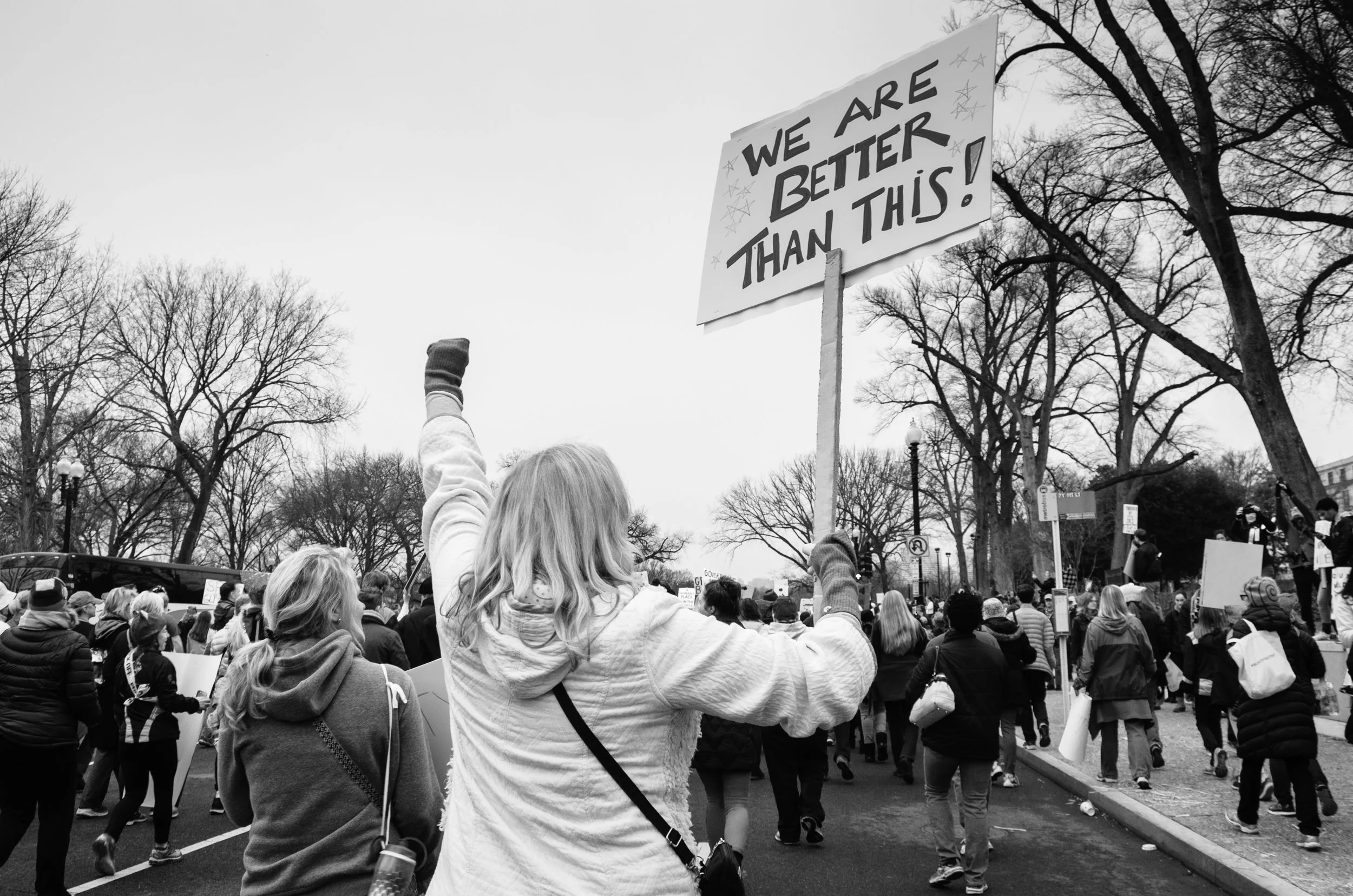
We live in a time in America when everything is politicized. Everything is viewed through an us vs. them lens of political partisanship. And it is tragic and toxic. Why is it such a politically partisan thing to state that one is "pro life," for example? Step back from the years of abortion debates along partisan lines and ask yourself that question. You'd think that people from all political parties, all backgrounds and walks of life could unite around the conviction that all human lives, from embryos to the elderly, are imbued with a God-given dignity that must be protected. You'd think we could unite around protecting precious lives against abortion, torture, sexual violence, war crimes, police brutality, gun violence and the like. All because we believe in the sanctity of life. But alas.
We live in a time in America when everything is politicized. Everything is viewed through an us vs. them lens of political partisanship. And it is tragic and toxic. Why is it such a politically partisan thing to state that one is "pro life," for example? Step back from the years of abortion debates along partisan lines and ask yourself that question. You'd think that people from all political parties, all backgrounds and walks of life could unite around the conviction that all human lives, from embryos to the elderly, are imbued with a God-given dignity that must be protected. You'd think we could unite around protecting precious lives against abortion, torture, sexual violence, war crimes, police brutality, gun violence and the like. All because we believe in the sanctity of life. But alas.

Environmental care is another issue that has been poisoned by partisanship. It boggles my mind and grieves my heart that wise stewardship of natural resources is a politicized issue. Why is it so rare and scandalous to have someone who is vehemently anti-abortion and yet also passionate about environmental protection (as I am), because both are about honoring God and his creation? You'd think it wouldn't be so hard for people to unite around the simple, compassionate logic of protecting the created beings of unborn life AND protecting the created world that declares God’s glory. And yet somehow we've pit these in opposition to one another, along partisan lines.

Everything has been politicized. "Facts" are now even politicized, with Trump fans and Trump critics appealing to different sets of facts on any given issue.

This is in part an outgrowth of the changing media landscape, which allows for (and has benefitted financially from) a multiplicity of partisan media channels. As my friend Ryan pointed out to me recently, one's choice of media is now a claim of political identity. To say one reads The New York Times or listens to NPR is now just as political as to say one reads Breitbart or watches Fox News. And that is crazy and sad. (And the media is as much to blame for this as are the consumers; we're all too comfortable in our echo chambers).

When the supposedly objective truth-tellers of society are politicized, we are really in trouble. What can be done? I humbly suggest two simple courses of action for the everyday American:

1) Be willing to break rank with your party and candidate. 

It should go without saying, but just because you identify with a particular political party or voted for a particular political candidate does not mean you therefore must support, defend, and get on board with everything that party or person does.

This is especially important for Christians, whose allegiance to the ethics of the kingdom of Jesus Christ means their allegiance to a political party can never be primary or absolute.

It's OK for Republicans to celebrate some of what President Trump does while vehemently speaking out against other things. You are not a traitor or a liberal if you disagree with Trump on torture and his posture toward immigrants and refugees. It's OK to be happy about his anti-abortion policies and Supreme Court justice pick and simultaneously outraged at his degrading comments about women, minorities and disabled people, all of which undermines the pro-life notion of the dignity of all human life.

Similarly, just because you're a registered Democrat does not mean you have to embrace the party's positions on everything. You are not a traitor or a fundamentalist if you break rank with your fellow progressives on the bizarre insistence on funding baby killing, even while celebrating the work on many other fronts.

We're losing the ability to do this. Partisanship is so strong that it has become a zero sum game, an all-or-nothing proposition. If you're not with us on everything, you're against us. This was the unfortunate message sent by the Women's March last week, which went out of its way to say pro-life feminist groups were not welcome.

But the world is too complicated for such simplistic approaches. We need to be OK agreeing with "our side" on some things and seeing wisdom in the other side on other things. Or maybe we should see most issues as needing the perspectives and input of both sides. The problems of this world are complex, and while "compromise" may not be the answer for solving them, collaboration certainly is. The best ideas come when a variety of people's voices are respected and heard. Which leads me to my second proposition:

2) Diversify your exposure to ideas. 

One antidote to the poison of partisanship is a culture of listening beyond our bubbles. This has been saidmany times and in many ways since November's election, but it really must be reiterated. It's so important.

The media we surround ourselves with has profound power to amplify our existing biases and further entrench us against the "others" on opposing sides of various issues. This is exacerbated by the fact that we can more easily than ever opt in and out of media that we like or dislike. But there are ways to resist this. Here are a few suggestions:

  • Read books and do deeper dives. Rather than just the bite-sized headlines-and-tweets intake we've grown accustomed to, read long-form pieces and especially books (a wide variety of them).
  • Go on a media diet. If you're reading this now, you're probably reading too many things on the Internet each day. I'm certainly guilty of this. Too much of anything is unhealthy, and this is very true of media. Turn off your TV. Go dark on social media for a few days.
  • Talk to actual people. In person! Go to a coffee shop to read and maybe talk to strangers. Learn how to have civil conversations with people who disagree with you. Join local clubs or civic organizations where you'll rub shoulders with a diverse array of people (church is good for this too). Build friendships with people from different political parties. It'll be uncomfortable, but you'll become a more nuanced, wiser person because of it.
  • Balance your media diet. It's good to be informed, so going off media completely isn't advisable. The key is narrowing down your media diet to just a couple healthy staples that you check regularly (but not too regularly). Pick a few reliable sources, preferably a smattering that represents both left, right and center-leaning perspectives.
  • Listen to NPR when you're driving. At least listen to the news reports at the top of each hour. I think they do a pretty good job objectively reporting news, though their commentary shows do tend to veer left.
  • Focus on your local community. Get to know the real problems, real people, real politics of your immediate context. Build strong families, schools, communities: what Yuval Levin calls "mediating institutions." Attention to the local will ground you in the tangible and relational in ways that fixation on the national/global cannot.
Read More
Christian Life, Church, Current Events, Politics Brett McCracken Christian Life, Church, Current Events, Politics Brett McCracken

The (Not Really) Eternal City

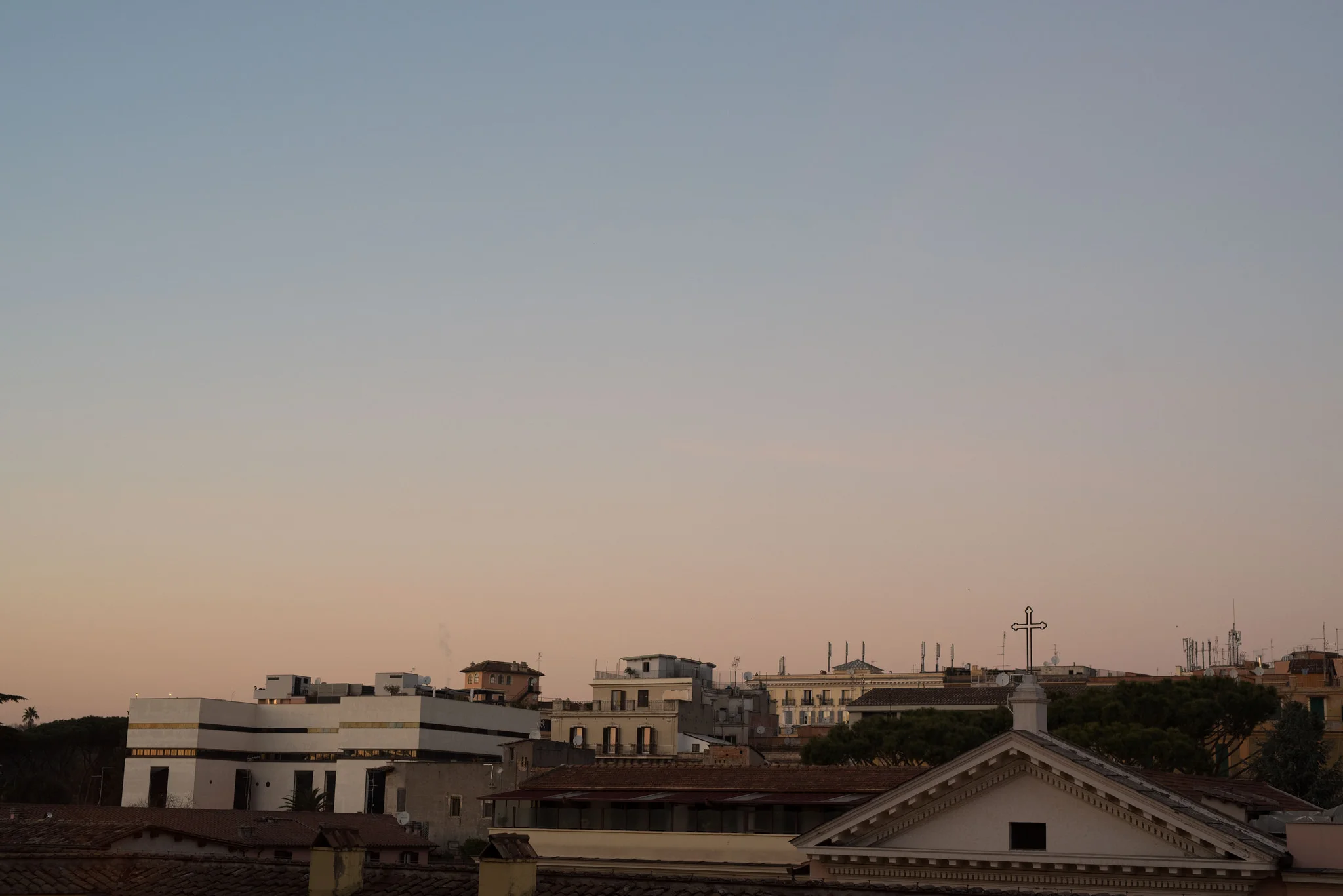
I woke up on the first day of 2017 in Rome, the "Eternal City," feeling the weight of a world where even the most enduring things are laughably far from "eternal." I was in Rome on a trip with Kira and six young adults from our church. It was a trip we designed around early church history. For six days we led our group to the many sacred Christian sites of Rome: the prison where Peter and Paul were held captive; the churches where Peter and Paul are buried; the early Christian catacombs; the Vatican; churches from the 4th century; churches on top of older churches on top pagan temples.

I woke up on the first day of 2017 in Rome, the "Eternal City," feeling the weight of a world where even the most enduring things are laughably far from "eternal." I was in Rome on a trip with Kira and six young adults from our church. It was a trip we designed around early church history. For six days we led our group to the many sacred Christian sites of Rome: the prison where Peter and Paul were held captive; the churches where Peter and Paul are buried; the early Christian catacombs; the Vatican; churches from the 4th century; churches on top of older churches on top pagan temples.

I had our group read two books in preparation for our time in Rome: The Patient Ferment of the Early Churchand Defending Constantine. In restaurants over gnocchi and pasta all'Amatriciana, we had discussions about the merits of pre- and post-Constantinian Christianity. Is power and government favor a good thing for the Christian church, or is it better off as a marginalized, outsider, minority community?

As we walked around the Roman Forum and the Colosseum, marveling at what remains from the once-dominant empire, the perishability of all things was an ever-present thought. At Pompeii we saw a city literally frozen in time, thriving one minute and buried under ash the next. How temporal are things, civilizations, kingdoms! We wondered if tourists in the year 4,017 would look at the remains of our cities and think the same thing. We thought about history, and the parts that are remembered and the people whose once-great names are now forgotten.

What of the history we are living now will be remembered? That's a question that seems especially appropriate at the start of 2017, a year that felt ominously "historic" even before it began.

---

Donald Trump is the new American president.

Words I never expected to write. I have little to add by way of commentary, at least on the rise and reality of Trump. Except that I will pray for him and hope for America's sake (and the world's) that he exceeds all expectations. John Piper's seven points on Christian faithfulness in the Trump era sum up my own perspective pretty well.

My main thought on President Trump is that he is just one man. Just four (or eight) years in the White House. America is just one nation. Her tenure as a dominant power may or may not last as long as the Roman Empire did (507 years). One day America will be a few fragments of pillars and ancient remains too. These are temporal things. The church, however, is eternal. The "Eternal City" is not Rome, but the City of God.

---

After our time in Rome, the eight of us spent a few days in England. We visited some Christian brothers and sisters in London, then in Newcastle. I preached at a church we've partnered with. One day our British Christian friends took us to a place called "Holy Island." On an uncharacteristically warm January day we strolled the mossy green hills of this island, among ruins of a 7th century monastery. A group of a dozen or so 21st century believers, we walked among tombstones with celtic crosses and thought of the generations of Christians who strolled this same ground, gazing at the same North Sea. We thought about the monks who were here one day, creating beautiful illuminated manuscripts, and then driven away by Viking invaders the next.

A few days later, when we flew from Europe back to California, it was one of those flights that takes place at perpetual sunset. Chasing the sun west, the "golden hour" of oranges and purples was our window view for about nine hours straight. Enjoying this longer-than-usual sunset (and trying not to fall asleep), I reflected on the setting sun as the metaphor of metaphors for human existence. The passing away of things. Ephemerality. Magical moments that are instantly memories, and then forgotten forever. In the moment I had the thought that Richard Linklater should make a fourth film in his "Before" series (Before Sunrise, Before Sunset, Before Midnight) in which Ethan Hawke and Julie Delpy sit together on a flight from Europe to America, chasing the sunset for nine hours. Perhaps Before Landing. I would watch that.

---

We returned home to more signs of decay. A loved one with cancer. Close friends who lost a baby. We reentered the news cycle and its predictable rhythms of terrorism, natural disasters, partisan ranting, celebrity deaths, gloom and doom. And yet for every sunset there is also a sunrise.

We went to church on Sunday and it felt like home. We hugged the saints who will be our forever family. We cried and laughed together with them that Sunday night. On Monday we celebrated the legacy of Martin Luther King, Jr. On Tuesday we went to work. On Wednesday our church's South African pastor became a U.S. citizen.

On Thursday evening as the sun set on the Obama years in America, I listened to Aaron Copland's "Appalachian Spring" and I wrote this post. Now the weekend is here, and with it a new temporal regime. And on Sunday we'll be at church again.

Read More

We Need to Be Re-Humanized

This week Donald Trump, Jr. tweeted a photo of an ad that compared the “Syrian Refugee Problem” to a bowl of Skittles. The ad suggested that we can best understand the worst humanitarian crisis of our time by thinking about refugees not as embodied, suffering people but as poisonous rainbow-colored candy that could kill us. Let’s set aside for a minute the politics of this and the admitted complexity of immigration and national security.
This week Donald Trump, Jr. tweeted a photo of an ad that compared the “Syrian Refugee Problem” to a bowl of Skittles. The ad suggested that we can best understand the worst humanitarian crisis of our time by thinking about refugees not as embodied, suffering people but as poisonous rainbow-colored candy that could kill us. Let’s set aside for a minute the politics of this and the admitted complexity of immigration and national security.

What does it mean that we are comparing real, fleshly, breathing human beings to pieces of candy? Are we so desensitized and disembodied that the real, physical, incarnational suffering of people on the other side of the world can only be understood in terms of candy-eating consumerism and our own self-preservation?

What does it mean that as a nation it is actually controversial to say something as self-evidently true as “black lives matter”?

What does it mean that police officers so easily resort to lethal force in confrontations with black men like Terence Crutcher (and Philando Castile and Alton Sterling and so many others) when non-lethal means are available to address a perceived threat?

What does it mean that savage examples of maiming and destroying bodies, whether via pressure cooker bomb or assault rifle or knife or delivery truck, are everywhere in the headlines?

What does it mean that our society has such an anemic and inhumane view of bodies that we casually dispose of unborn children, insisting that their bodies are not human but simply mounds of tissue to be removed as we would remove a tumor or cyst?

What does it mean that, when our bodies start breaking and causing us immense psychological and emotional stress, we can choose to end our lives via legal physician-assisted suicide?

What does it mean that we believe our “gender identity” is something wholly unrelated to our reproductive organs and biological realities, such that we can manipulate our bodies via surgery or hormone treatments to force it into the expressive identity we prefer?

What does it mean that forcing our bodies into preferred identities is something that also fuels billion dollar diet, fitness and pharmaceutical industries, in which we regulate and soup up our bodies like we would a car or a prized toy?

What does it mean that we care so much about organic, natural, non-genetically modified food but do not seem to find anything wrong with leveraging technology to modify our bodies and hormones to our liking?

What does it mean that sex has become a largely disembodied experience, a Tinder-fueled animal exchange divorced from commitment or, more commonly, simply a digital experience of screen-mediated orgasm?

What does it mean that our closest connection with fellow humans in crowded streets or coffeeshops is not eye-to-eye but bowed-head-to-bowed-head, as each of us engages a screen rather than the eternal, enfleshed beings sitting next to us?

It means we need to be re-humanized.

Andrew Sullivan’s recent New York Magazine essay, “I Used to Be a Human Being,” is his personal narrative of an increasingly universal problem: estrangement from ourselves (and each other) in a world where consumerism and technology and secularism and globalization and identity politics and more have combined to produced a rapidly de-humanizing world.

It seems we have adopted a sort of neo-Gnostic view of the body that treats it as something to be used, manipulated, controlled and harnessed in service of a nebulous Platonic idea of who we are.

What, if anything, can we do to re-humanize ourselves?

I think we can start by reducing our disembodied, mediated screen experiences and making more space in our lives for just being there in physical space, with physical people, present and talking and exploring the physical world together.

Another thing we can do is orient our lives more around the local and proximate than the global and abstract. The national news and Internet media machine is not all bad, but it can distract us from the much more graspable and changeable and beautiful communities right in front of us. Go to neighborhood gatherings; frequent local cafes and actually talk to people; prioritize local associations like community volunteer groups and churches.

One thing the church can do is preach and live a more robust theology of the body. The body is crucial to understanding Christianity, founded as it is on a God who became flesh and dwelt among us. Today's world is largely information based. We are bombarded with code and symbol and text every moment: cerebral stimuli to decipher. Christians are a people of the Word too, to be sure, but a Word that became flesh.

It matters that Jesus walked on this planet like we do, and sweat and bled and cried and hungered and desired like we do. It matters that he looks like us and we look like him, and that we are walking icons of the God whose image we bear. The Incarnation of Christ means it matters that we are human, and that we are here. Every life, every body, from the baby in the womb to the chronically ill octogenarian, matters.

We are not skittles; we are not statistics; we are not machines; we are not tissue masses; we are not politicized abstractions.

We are humans.

Read More
Christian Life, Current Events, Politics Brett McCracken Christian Life, Current Events, Politics Brett McCracken

“Tolerant” California Will Not Tolerate Christian Colleges

A pernicious bill (SB 1146) now moving through the California legislature would force Christian colleges and universities into submission when it comes to their beliefs and policies regarding sexual orientation and gender identity. What Sacramento says is true about SOGI is now what every knowledge institution in California must acknowledge in practice (if not in belief) to be true. So much for valuing diversity.
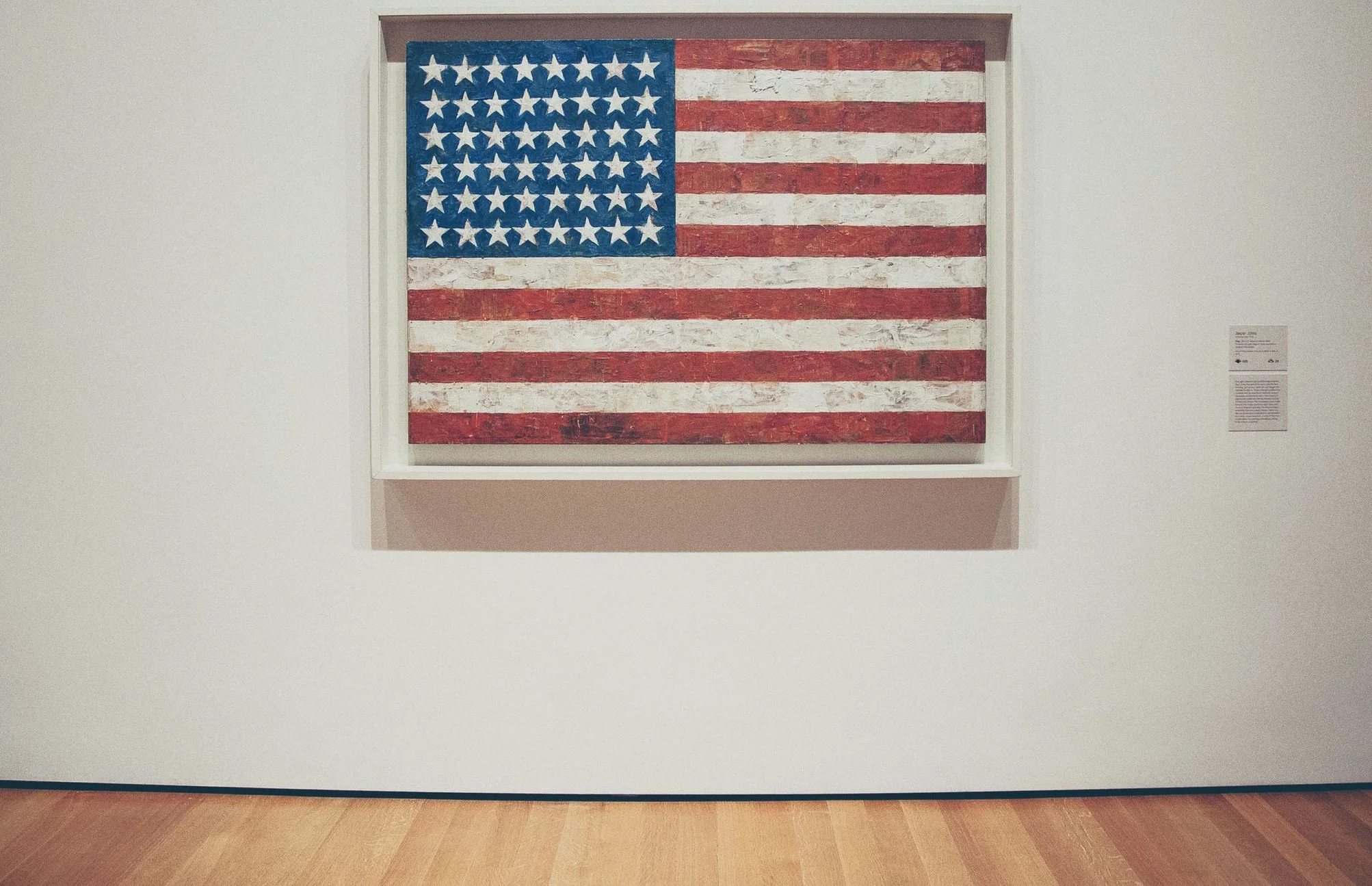
I’ve been a California resident for more than a decade, long enough to remember when a Republican was governor (Arnold Schwarzenegger) and when 52% of Californians voted against the redefinition of marriage, not that I’m nostalgic for those days. California is a state that is weird and wonderful and unpredictable. Driven by trendiness and fashion du jour rather than history or tradition, California is necessarily a fast-moving state (It’s been less than a decade since Prop. 8 and less than two years since Caitlyn Jenner was a man!). California is about change, newness, discovery, pioneering. This creates fertile ground for Hollywood creativity and Silicon Valley innovation, but it also has downsides. California’s disdain for tradition and apathy about old things often leads to a dangerous void of perspective, pacing and logic.

California is about the NOW and the NEW, a real-time feed of chaotic fragments of expression and opinion (California is the Twitter of states). California is where supposedly open-minded, progressive people go. It’s where dreamers and outcasts and immigrants and refugees flock. It’s where Don Draper finally found his happy place. It’s a state that celebrates every culture and all ideas. Diversity, inclusion, pluralism and tolerance are its mantras.

Or so we thought.

A pernicious bill (SB 1146) now moving through the California legislature would force Christian colleges and universities into submission when it comes to their beliefs and policies regarding sexual orientation and gender identity (SOGI). Sec. 1 of SB 1146 would remove an existing religious exemption and narrow it so that faith-based institutions (including Jewish, Muslim, Catholic, etc) could no longer think and behave differently on these most central human questions. What Sacramento says is true about SOGI is now what every knowledge institution in California must acknowledge in practice (if not in belief) to be true.

So much for valuing diversity.

How ironic that the state that leads the nation in “tolerance” is moving to impose a “one size must fit all!” policy on SOGI orthodoxy for the very institutions (colleges and universities) who contribute the most to the state’s ideological diversity.

Welcome to the new liberal intolerance. SB 1146 is a blatant example of it, and the contentious debates about the bill in the California legislature have raised this concern. As state senator John Moorlach (R-Costa Mesa) said in the California Senate debate about SB 1146 in May, “Sometimes you can become what you hate, and you can become intolerant if you’ve been the victim of intolerance.”

SB 1146’s author, Senator Ricardo Lara, insists that he is not becoming what he hates. But he is. He insists that he values all forms of diversity. But he doesn’t. His bill makes it clear that the only diversity he values is diversity with an asterisk. And the asterisk is: you are part of the diversity we champion unless you dare to believe and live according to your traditional religious convictions about sexuality and gender.

That’s faux diversity. Faux tolerance. It’s discrimination. It’s exactly what Lara and the anti-discrimination police are fighting against. They’re becoming the enemy they used to fight against. Lawmakers in the Golden State have clearly forgotten the Golden Rule.

The “we’re becoming what we hate” nature of this is something wise liberals are recognizing and starting to decry. Take Nicholas Kristof in the New York Times, blasting the “liberal poppycock” of faux tolerance and blatant discrimination toward conservatives:

When perspectives are unrepresented in discussions, when some kinds of thinkers aren’t at the table, classrooms become echo chambers rather than sounding boards — and we all lose… Universities should be a hubbub of the full range of political perspectives from A to Z, not just from V to Z. So maybe we progressives could take a brief break from attacking the other side and more broadly incorporate values that we supposedly cherish — like diversity — in our own dominions.

California has forgotten what pluralism and tolerance are and why they are valuable for democracy. It’s not about everyone agreeing about everything. It’s about the value for society when the opposite is true: when there are varying perspectives and strong institutions that respect one another even while they hold distinct (and often mutually exclusive) beliefs. Civil disagreement and principled pluralism are foundational to a healthy democracy. Sadly America at large is forgetting how to do this and why we should.

California especially, prone as it is to quickly forget history and dispense with the wisdom of tradition and the guardrails of time-honored values, should recognize that the role distinctly religious institutions play is vital as a societal preservative.

In such a rapidly changing culture, religious institutions that maintain classical understandings of religious teaching are crucial. With a bigger picture and (much) longer view, these institutions function as preserving agents and safeguards against an ephemeral, disposable culture that would just as soon cycle through ideas about human flourishing as soon as they can come up with them or feel them to be true.

On the issues of marriage and sexuality, for example, the Christian colleges targeted by SB 1146 are seeking to preserve the church’s 2,000+ year teachings. The church hasn’t changed; culture has. We forget how rapidly American opinion on marriage and sexuality has changed in recent years. As recently as five years ago both Barack Obama and Hillary Clinton publicly sided with traditional understandings of these issues.

In a world as sped-up and forgetful and post-truth as ours is now, conservative religious colleges and universities should be more than just tolerated. They should be supported and invested in, protected from the inertia of change and the Orwellian intrusions of government. When these agents of conservation and preservation are no longer tolerated, what or who in our world will serve as conservers and preservers?

When these religious institutions are made to give up the very beliefs and practices that make them valuably distinct, who will be left to speak clarity into our confused culture? Who will be left to offer truth claims that are backed by centuries of wisdom rather than seconds of whim? Who will be left to lead in selfless love when all the culture can think to do is please and protect the self? Who will be left to tell the Californias of the world to slow down and ponder the logic of their “tolerance with an asterisk” philosophies?

Read More
Current Events, Politics Brett McCracken Current Events, Politics Brett McCracken

It's Time for a Third Party in America

I think it’s time America gets serious about moving beyond a rigid two party system. If the 2016 election has confirmed anything, it is that the recent incompetence and unpopularity of the two existing parties is reaching a crisis point. The crazy fringes are now taking over the mainstream parties, and so it’s time we start thinking of third parties not as extremist dreams but as realistic options for the sane, moderate and balanced Americans who are being left behind.

I think it’s time America gets serious about moving beyond a rigid two party system. If the 2016 election has confirmed anything, it is that the recent incompetence and unpopularity of the two existing parties is reaching a crisis point. The “third party candidate” stigma used to be reserved for extreme partisans, like the Green Party’s Ralph Nader or the Socialist Party of America’s Eugene Debs. Trump’s radical candidacy would normally be good fodder for a third party run, but in this election he has latched himself onto (hijacked?) one of the two existing parties, to everyone’s detriment. The crazy fringes are now taking over the mainstream parties (well, Bernie tried), which are becoming more and more partisan, and so I think it’s time we start thinking of third parties not as extremist dreams but as realistic options for the sane, moderate and balanced Americans who are being left behind. I personally feel completely unrepresented by the Democratic and Republican parties. If Michael Lind is correct in his recent column in the New York Times that Trumpism and Clintonism are the future of their respective parties, I want nothing to do with them. In Lind’s view the GOP of Trump is one where “a kind of European-style national populism is rising, for which protectionism and immigration restriction are central issues.” The DNC of Hillary Clinton is “a slightly more progressive version of neoliberalism freed of the strategic concessions to white working-class voters associated with Bill Clintonism.”

I want nothing to do with a GOP that is nativist, anti-immigrant, anti-minority, anti-environment and still somehow claims the moral high ground on issues like abortion and family values.

I want nothing to do with a DNC that claims to care for the oppressed and “least of these” but excludes in this the millions of defenseless babies killed every year in the abortion industry.

I don’t want to associate myself with a party (Republican) that talks about freedom and the dignity of human life but supports torture, denying entry to refugees and “rounding 'em up” mass deportation.

I don’t want to associate myself with a party (Democrat) that talks about tolerance for all but hypocritically supports punitive legislation against organizations whose religious convictions on sexual ethics are out of step with progressivism.

Is there really no room for a third party in between these polarities? Can there not be a party that champions smaller government, job creation AND environmental protection? Is there no one else who would be interested in a party whose pro-life agenda includes abortion restriction AND gun control? Would it be too much to ask for a party that is built around civility and statesmanship and kindness and the humility of admitting when you're wrong?

Especially as policy realignment happens in the two parties (the GOP becoming less about social values and more about “America First!” fear/isolationism; Democrats becoming more the party of the 1%), I would think there would be more and more momentum for third party options among those who can’t in good conscience get on board either of the two existing platforms.

A Clinton vs. Trump election in November would leave me, and millions of other Americans, with no choice but to decline to vote, write in a candidate or vote for the other issues and races on the ballot but not for president. And that is unfortunate.

I don’t presume to know the reasons why third parties have never done especially well in America, though I’m sure there are many. I’m not saying we need to be exactly like European multi-party democracies, but it seems like something needs to be done. In 2004, 40% of Americans believed a third party was necessary. In 2014 that number grew to 60%. The majority of Americans want more than two options because they increasingly disapprove of the two existingoptions.

This is the 21st century. A multiplicity of options (on everything from media sources to smartphone choices to cars and colleges and Instagram filters) is our expectation. And this is America! How unAmerican is it to limit the options of anything to just two? I thought this was the land of free markets and competition and choice. Sadly there are two impenetrable monopolies on political choice in America, two unbreakable and uncompromising political unions. And both of them are corrupt.

We can do better.

Read More
Current Events, Politics Brett McCracken Current Events, Politics Brett McCracken

Oscar, O.J. and Trump

Like everyone else, I’ve been trying to make sense of the rise of Donald Trump as a likely Republican nominee for U.S. president. How could this happen? What kind of America looks at a man as “openly debased and debauched” as Trump and sees a man they would like to have in the most powerful office in the world? I think it has something to do with the Oscars and O.J. Simpson.

Like everyone else, I’ve been trying to make sense of the rise of Donald Trump as a likely Republican nominee for U.S. president. How could this happen? What kind of America looks at a man as “openly debased and debauched” as Trump, a man who ridicules disabled people and routinely degrades womena dangerous man with fascist tendencies, a vulgar man who says he doesn’t need God’s forgiveness, and sees a man they would like to have in the most powerful office in the world? I think it has something to do with the Oscars and O.J. Simpson.

A friend’s blog post on this year’s Oscar nominees as an explanatory lens for Trump first got me thinking about the Oscar-Trump connection. But I see it as less about the films themselves (though there is merit in that reading) as about the way the Oscars function as an amusement, an over-hyped “Oscar Race.” The discourse surrounding the Oscars has morphed into a discussion not really about the substantive merits of films as much as the “race” and the odds and the whole spectacle of awards-giving. There are entire websites devoted to tracking Oscar odds, and each step in the months-long awards season is so breathlessly covered by Hollywood press that consensus winners emerge fairly early in the process. Academy voters are invariably influenced by the endless tweets, articles and TV coverage describing “momentum,” favorites and forecasts, and thus they perpetuate the predictions by turning them into reality.

By the time the Oscars come around, it’s clear who will win in most major categories (i.e. this year: Brie Larson, Leonardo DiCaprio, The Revenant, etc.). Everyone knows that they will win even if they couldn’t articulate why. The Oscars, like the presidential election, have become a media phenomenon wherein the substantive merits of candidates/films are far overshadowed by the coverage of the race. It’s the drama of winning, losing, odds, unpredictability, injustice (#OscarsSoWhite) that compels America. Not the actual content of any of the potential winners.

The O.J. Simpson trial has been on my mind as I’ve been watching the FX miniseries, The People vs. O.J. Simpson. The series is massively compelling and does a good job situating the legacy of that infamous moment in American culture within our current media zeitgeist. The O.J. Simpson story of 1994-95, from the live-televised Bronco chase to the courtroom drama (also live televised) and associated media circus, can be looked back upon as the moment when infotainment crystallized as America’s preferred method of amusement. It was a moment that foreshadowed the rise of 24-hour cable news and the reality TV boom. What The People vs. O.J. Simpson so adeptly captures is how the facts and evidence (the substance, if you will) of the trial so quickly became co-opted by the surrounding discourse: the tabloid sideshows and media tell-all books, the Larry King interviews, the domestic abuse and race narratives, the Hollywood celebrity culture (including a Faye Resnick-Donald Trump connection!), etc.

The evidence in the case was slam-dunk, but the trial became something beyond evidence. Something beyond rationality. It was not about the substance of what happened that night to Nicole Brown and Ron Goldman. It became more about the back-and-forth struggle between the “Dream Team” defense and the Marcia Clark-led prosecution. Similar to Making a Murderer and other binge-worthy true crime amusements, the personalities of the trial characters involved (Marcia Clark’s hair! Rivalry between Bob Shapiro and Johnnie Cochran! Kardashians! Kato freakin Kaelin!) became more interesting than the pursuit of justice for the victims. The anger and racial tension of L.A. (just a few years after the riots) paved the way for O.J.’s acquittal more effectively than any exonerating evidence did (there wasn’t really any).

One thing that the Oscar example, the O.J. trial, and Trump’s unlikely popularity have in common is that they all reflect the short attention spans of American people. The Oscars are notorious for having little memory for films in any given year that are released before October. Great films from February or March are doomed to be long forgotten when it comes time for Academy members to cast their ballots.

It was so clear in June 1994 that O.J. had committed the murders (blood at Simpson’s house, bloody gloves, bloody socks, blood in his car, all matching blood from the crime scene). When O.J. was fleeing in the Ford Bronco with a gun to his head, having left a suicide note, it was clear this was a guilty man on the brink. But as the months went on and the trial circus commenced, much of this was forgotten as the twists and turns, bombshells and iconic one-liners (“if it doesn’t fit, you must acquit”) took center stage. Likewise with Donald Trump: His past is as riddled with scandal as any politician in recent memory, and every week there is a new horrible statement, lawsuit or offensive remark that would immediately disqualify other presidential candidates. But the short-term memory of our culture has never worked to a politician’s advantage as it does with Trump.

Not only do each of these examples (Trump, the Oscars, O.J.) show the short term attention span of our culture, but they also show how we are often compelled by the circus over the substance of issues, reacting emotionally to things rather than rationally. Maybe we’re too lazy or too apathetic to wrestle with the core issues themselves, preferring to amuse ourselves with peripheral issues while relying on pundits to form our opinions. Or maybe we’re just increasingly unable to form judgments because we lack the requisite moral vocabulary or critical thinking skills.

Either way, this puts us at the mercy of the rhetoric of “winning” and “momentum.” For if we are incapable (or unwilling) to evaluate something on its own merits, what else is there but its brute power and #winning success to sway us to its side? Whether it’s the momentum behind The Revenant or momentum going into Super Tuesday for Donald Trump, this sort of marker of “worthiness” is often completely divorced from any real assessment of merit. Yet it is a marker of worthiness that convinces far too many of us.

In any society where there is a void of meaning, where consensus and shared values have eroded and rational discussion gives way to gut reactions, display of strength becomes the only thing that matters. Policies, ethics, visions of the good life matter little because no one can agree on any of it, let alone speak about or understand such things. Meanwhile, the media landscape is such a contradictory glut of voices, attacking and defending every possible idea from every possible angle, that people become numb and nihilism reigns. When everyone is talking, no one is trusted and meaning is lost. We don't care about the nuances of foreign policy or tax plans or health care anymore because it's all just so untrustworthy and incomprehensible. Invariably in this environment, the one who yells the loudest and with the greatest appearance of strength succeeds.

Part of the genius of Trump’s campaign is that he recognizes this. He talks almost exclusively about winning: how he has been winning and will continue to win, and how he will make America win more. He talks more about polls than any candidate in history. He knows that no one actually pays attention to the substance of his plans, platforms and policies, so he doesn’t bother with having any. He knows that appearing to be and being a winner is all that matters. He knows that confidence and tell-it-like-it-is swagger is more compelling to 21st century America than are concrete ideas. And the media sadly perpetuates this. The vast majority of news coverage of political campaigns consists of reporting on polls (who's ahead or behind) and focusing on debate zingers and attack ads. There is no interest in reporting on education reform programs or the finer points of tax plans. No one cares! It’s about the battle for the White House. The Oscar race. The trial of the century!

In the end, the acquittal of O.J., like the awarding of best picture Oscars to films like Crash (2005), Argo (2012) or Birdman (2015), are things we regret. In retrospect we see that O.J. was clearly guilty, and we see that those films were clearly not the best films of their respective years. Likewise, if Donald Trump were elected president I think America would regret the decision quickly. But unlike regrets about undeserving best picture Oscar winners, or even falsely vindicated murderers, the regrets about electing a megalomaniacal despot like Trump come with serious global consequences. Can we afford the “buy now, regret later” approach when it comes to electing the leader of the free world? In allowing ourselves to be swept up in emotional catharsis at the expense of measured assessment of the facts, do we want to make an O.J. or Argo mistake with the U.S. presidency?

Read More
Current Events, Politics Brett McCracken Current Events, Politics Brett McCracken

America’s Reality TV Election

The only real way to make sense of 2016 America, in particular the unfolding presidential election, is to see it in the way Donald Trump does: as a game. Donald Trump’s stump speeches mostly consist of talking about winning, calling others losers, and insisting that he will help America win again. This involves beating China, Japan and Mexico (and everyone else) at trade, as he said in his New Hampshire victory speech. It also involves building a wall along the Mexican border and forbidding the entry of Muslims, presumably to keep foreigners from undermining America’s winning.

The only real way to make sense of 2016 America, in particular the unfolding presidential election, is to see it in the way Donald Trump does: as a game. Donald Trump’s stump speeches mostly consist of talking about winning, calling others losers, and insisting that he will help America win again. This involves beating China, Japan and Mexico (and everyone else) at trade, as he said in his New Hampshire victory speech. It also involves building a wall along the Mexican border and forbidding the entry of Muslims, presumably to keep foreigners from undermining America’s winning. When he’s not talking about making America a winner again, he’s talking about his own winning, how he makes great deals, is rich, is ahead in polls, etc. To Trump, the presidential election is not about policy nuance, demonstrated leadership or consistency; it’s simply about winning. It’s a contest, a race, a battle, an amusing spectator sport. And this makes sense to America, because it’s how elections have been understood for some time now.

I don’t know when it happened, but at some point in the last few decades we stopped talking about “presidential elections” and started talking about the “presidential contest,” “the race for the White House,” “the battle for America,” #Decision2016, and so on. The media perpetuated it, of course, as they are interested in making money, and things that make money in America tend to tap into our competitive spirit and vulgar obsession with spectacle. Take, for instance, the American obsession with reality TV competition shows. These shows are as bankable as any, because they are about winners, losers, getting cut (“You’re fired!”) or advancing. Survival of the fittest. March Madness. Single elimination. Go big or go home. America!

Donald Trump knows all of this better than anyone. He’s seen first-hand in The Apprentice how much American audiences love to celebrate ambition done well and to ridicule the desperation of losers (like “low energy” Jeb!). Trump has succeeded in part because he’s tapped into the reality TV mindset of America and recognized the zeitgeist of infotainment: people like to watch and participate in activities of winning and losing (sports, gaming, Fantasy Football, poker, etc.) and are thus naturally drawn to a campaign framed in those terms.

But this election is like a reality TV show in more ways than just Trump. In fact, I think you can see elements of several of America’s most popular “unscripted” competition shows in this year’s election:

Survivor: America loves the scheming, backstabbing, forging of alliances and betrayals that characterize a dog-eat-dog show like Survivor, and they get such things in spades in a presidential election. Whether it is the “former friends turned enemies” narratives (e.g. Jeb Bush and Marco Rubio), the forging of alliances to take down rivals (Jeb Bush and Chris Christie teaming up against Rubio), or the survival-of-the-fittest rhetoric of winners/losers and Social Darwinism, presidential elections feed the same hunger for do-or-die spectacles that made gladiatorial bloodsport so popular in ancient Rome.

The Bachelor: Presidential primaries are sort of like the awkward rose ceremonies at the end of an episode of The Bachelor or The Bachelorette. At each primary the voters give roses to only so many candidates, and the others must say goodbye.

The Amazing Race: With its relentless pace, challenging contestants to crisscross the globe, sometimes sleeping only in planes, The Amazing Race feels like a close parallel to presidential elections. In the 2016 election (at least concerning a certain Republican candidate who wants to ban all Muslims and build walls to keep Mexicans out), “The Amazing Race” may also double as a descriptor of underlying currents of nativism and white supremacy.

The Voice: The parallel here is not so much the contestants but the judges. The celebrity judges, with their nifty swivel chairs and clever ways of saying variations on the same comment, week after week, have close counterparts in the Political Pundit Industrial Complex. Wolf Blitzer, Chris Matthews and Megyn Kelly are just like Adam Levine, Blake Shelton and Gwen Stefani. They are bigger stars than those they are paid to analyze, and they can find drama in even the most painfully boring of performances.

So, who will emerge from the field and take home the “final rose” of the White House this year? Who will be America’s next Kelly Clarkson or Carrie Underwood? Who will be the next politician-turned-Reality-TV-personality (think Sarah Palin) and who will be the next Reality-TV-personality-turned-politician (think Donald Trump)? I bet Making a Murderer’s Dean Strang could have a future in politics, and maybe Snooki could unseat Chris Christie as New Jersey governor? Anything’s possible. Whatever happens, two things will be increasingly true: 1) It will be entertaining, and 2) Neil Postman's 1985 book Amusing Ourselves to Death will be ever more prophetic:

“When a population becomes distracted by trivia, when cultural life is redefined as a perpetual round of entertainments, when serious public conversation becomes a form of baby-talk, when, in short, a people become an audience, and their public business a vaudeville act, then a nation finds itself at risk; culture-death is a clear possibility.”

Read More
Church, Current Events, Politics, Technology Brett McCracken Church, Current Events, Politics, Technology Brett McCracken

Crumbling Consensus

Every group, every movement, every family, every coalition or club or team of any kind requires some level of agreement/consensus in order to be meaningfully distinct in identity and remotely efficacious in purpose. And every one of these groups knows how elusive but essential consensus can be. But consensus seems to be more elusive than ever, at every stratum of society.

Consensus has never been easy to come by. Every group, every movement, every family, every coalition or club or team of any kind requires some level of agreement/consensus in order to be meaningfully distinct in identity and remotely efficacious in purpose. And every one of these groups knows how elusive but essential consensus can be. But consensus seems to be more elusive than ever, at every stratum of society.

On a global scale, the promise of a flattened world where globalized trade and enmeshed economies lead to a new order of shared commitments to the common good has certainly not come to fruition. If anything the attempts at forging consensus have only aggravated existing resentments and differences, whether among radical Islamic entities or “don’t tread on me!” rogues like Vladimir Putin or Kim Jong-un.

On a national level, the “united” part of the U.S.A. has become little more than a specter of nostalgia. Not that true unity was ever there (the Civil War and its still-smoldering legacy are just one obvious testament to this), but these days there hardly seem to be two Facebook friends who agree on more than a handful of things.

This is all very evident in the crazy-and-getting-crazier 2016 presidential election. The two party system has never seemed more incapable of capturing the streams of fervor and diversity of conviction among the American electorate. The Republican Party especially, after a steadily building fragility in the Tea Party era, is on the verge of total fracture as the stark differences between GOP tribes become more evident. There are the angry/nativist/anti-immigrant tribes supporting Trump and Cruz; the libertarian tribe supporting Rand Paul; the tribes of many nations supporting the other seven or so candidates, and so on… Even among Democrats there is a striking fragmentation, with socialist-leaning Bernie Sanders carrying the torch of the Occupy Wall Street crowd and Hillary Clinton carrying the torch of establishment liberalism. Reliable old coalitions like evangelicals are no longer predictable or remotely monolithic in their political preferences (they never really were). As an article on CNN recently highlighted, there are at least 7 distinct types of evangelical voters in this election cycle.

It’s all quite confusing for voters, and I predict it will result in record low turnout in November, especially among the 18-30 crowd (unless Bernie Sanders is on the ballot). But the election is only a microcosm of a larger cultural trend toward hyper-fragmentation and societal polemics that goes far beyond pluralism.

Why are we so fragmented? Why is consensus harder than ever to come by? Here are just a few quick answers to an (obviously) wide-ranging question:

  • Consensus requires belief in shared values; shared values are built on trust in metanarratives, faith in institutions and continuity between generations. But all of this was obliterated by postmodernity.
  • Technology has moved quickly and decisively in the direction of “i.” The Internet, apps, phones, social media… all of it is totally tailored to individual consumers, such that the experiences of the world (via feeds, playlists, Netflix queues, etc.) are increasingly unique to the tastes and preferences of individuals. Simultaneously, the infinite array of sources, communities and idea-spaces on the Internet are the perfect breeding ground for ever more hybrid and amorphous “bubbles” of ideological mutations.
  • In part because more of it exists and is accessible than ever before, information (e.g. anything to be found via Google) has become too overwhelming and too untrustworthy to facilitate healthy discourse and build common cultural language. Internet information serves only individuals, answering on-demand questions and confirming or denying whatever we wish. It never forces us to be wrong if we don’t want it to. And if consensus is to be built, some people have to accept that they are wrong.
  • Academia, one of the traditional bastions of consensus-building thought leadership, is more fractured and incoherent than ever. Look at the dissertation topics in any Ph.D. program or examine the research interests of any faculty website and you’ll see how the long march toward hyper-specialization and hyper-narrow conceptions of “expertise” has rendered intellectual output little more than jargony, echo-chamber gobbledygook. The insular, impenetrably abstruse nature of academic writing (and apathy about good prose) has led to a dearth of public intellectuals who actually help the masses reason together.

For all these reasons and more, consensus is harder than ever to come by.

This is especially true for already ambiguously defined coalitions such as “evangelicalism” and its parent company “Protestantism,” both of which are by nature on shaky definitional grounds given that their seemingly rock solid foundation for authority (Scripture) is subject to nearly infinite interpretive permutations.

The fragility of evangelical consensus has become starkly evident in recent years, particularly as it relates to evangelical identity and boundaries of orthodoxy. Society’s shift away from traditional Judeo-Christian sexual ethics has of course precipitated much of this, bolstered last summer by the Supreme Court’s decision in Obergefell v. Hodges to legalize gay marriage.

Many denominations have split because of this issue and just this month the global Anglican Communion censured The Episcopal Church (TEC) in the United States for its liberal stance on same-sex marriage.

A few months ago the Council for Christian Colleges and Universities (CCCU), a 40-year old coalition of 121 Christian institutions of higher education, lost a few members and nearly split over the question of whether its institutions could permit faculty and staff to be in same-sex marriages. Meanwhile, individual Christian colleges are facing controversies and bad PR on account of the increasingly all-over-the-spectrum opinions within their ranks on everything from sexuality to Islam and racial diversity.

As an employee of an evangelical college (Biola University) and an alumnus of another (Wheaton College), I can attest to the growing sense of fragmentation and unease within these institutions regarding questions of boundaries and identity. You have liberal constituents (students, faculty/staff, alumni, etc.) who wish the schools would loosen up their theological boundaries and fall in line with government-mandated norms on things like LGBT inclusion and abortion pill access. Then there are many conservative constituents who are nervous that the colleges will compromise on convictions under so much pressure. What compounds the difficulty for colleges like Biola and Wheaton is that they are non-denominational: there is no governing theological entity beyond them to which they can appeal for clarity and a final word. No, the buck stops within their walls and within their (relatively young) histories. And what at once makes these non-denominational schools great (Presbyterians, Baptists, Pentecostals, Eastern Orthodox and more comingle and cross-pollinate) can also prove challenging in building theological consensus.

Though it will be hard, I think the sustainable way forward for institutions like this is to move toward more rather than less clear theological definition. This will require much discussion, debate, many committees and disappointments on all sides. And it should not be rushed. But it will be helpful in the long term.

Local churches have more stability than parachurch organizations these days in part because they are free (and motivated) to be theologically precise. People choose or don’t choose to join a church in large part because of its specific set of beliefs and theological interpretations. And unlike Christian colleges or parachurch organizations, churches are not as financially pressured to keep a diverse coalition of constituents/donors happy. For a local church, definitional boundaries are helpful so that members know exactly what they are committing to and visitors have clear reasons to “take or leave it.”

In order to be effective in their missions, organizations and groups of any kind must be clear on who they are and what they believe. We should want to see discernible differences of convictions and goals among the many groups that make up a healthy pluralistic society. A conservative evangelical college shouldn’t be forced to look and act just like a secular state school, just as GLAAD shouldn't be forced to adopt the values and mission of Focus on the Family. Boundaries and differences allow groups to have meaningful identities and society as a whole to thrive.

That said, these stronger-because-they-are-distinct organizations can and should work together where there is overlap and common goals. Cooperation for the common good can exist even in the midst of crumbling consensus. We can find consensus on some things while disagreeing on a whole lot more. A Muslim community center and an evangelical college can work side by side in refugee relief without building a case for theological sameness. A Catholic theologian can co-present at a conference with a Baptist colleague and pray side by side while respecting the fact that he could never be a tenured faculty member at the Baptist seminary.

These sorts of common-ground opportunities, taken as they come and for what they are, are key to rebuilding consensus in our fragmented age. They are chances to humanize one another and learn from each other’s traditions, which are stronger insofar as they are allowed to be distinct.

Read More
Current Events Brett McCracken Current Events Brett McCracken

Report From the Frontlines of Refugee Relief

In the midst of the often abstract debates and discourse surrounding refugees, we can lose sight of the real lives involved and also despair about what can be done to help. It's important that we keep ourselves informed about what is actually going on, and it's important that we support and celebrate the good, compassionate, humane work being done to ease the suffering.
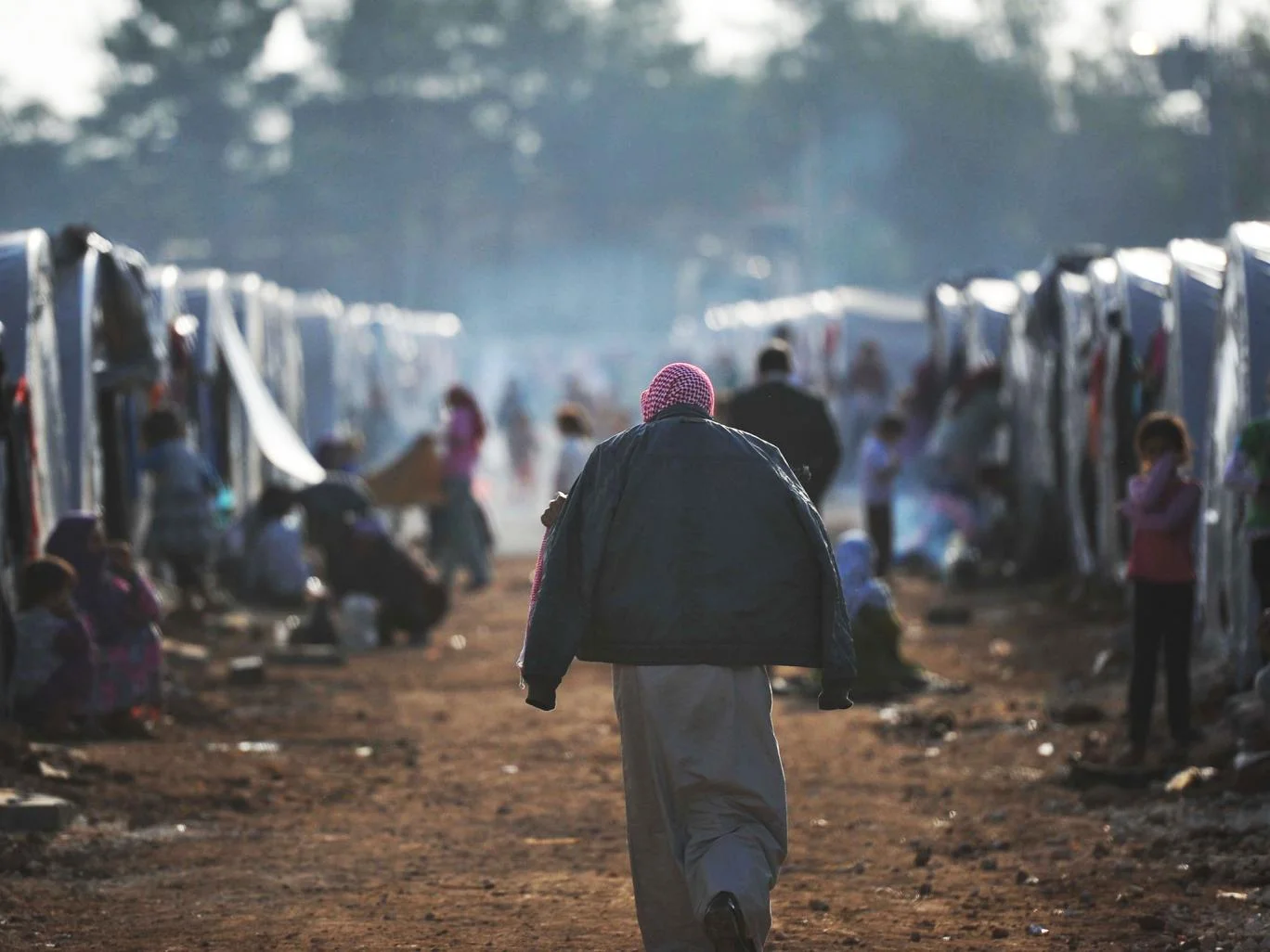
In the midst of the ongoing debates and often abstract discourse surrounding refugees, we can lose sight of the real lives involved and also despair about what can be done to help. It's important that we keep ourselves informed about what is actually going on, what the refugee crisis looks and feels like on the ground. It's important that we support and celebrate the good, compassionate, humane work that IS being done to ease the suffering. My friend Olivia works for a Christian relief organization on the front lines of the European refugee crisis. She is currently working in Greece on the islands that are often the first stop for the refugees arriving in Europe. She and I have been corresponding via e-mail and her on-the-ground reports are both heartbreaking and encouraging. Please take a minute to read her words here:

I've been on the ground in Greece for almost three weeks, and my team are in the thick of the humanitarian response. We're working on three islands (but expanding to five), and I have met incredibly kind people with heartbreaking stories.

Our organization is working primarily with water, sanitation and hygiene (WASH) interventions and the distribution of non-food items 24 hours/day. When refugees come off the boats (or are brought in by the coast guard), they are brought to transit sites until they get registered. They cannot leave the island until they are registered with the Greek government. They often arrive at these sites dripping wet with only the clothes on their backs (many of them lose their bags in the sea or the smugglers throw bags overboard to make room for more people).

We are giving out basic hygiene items, sleeping mats, blankets, etc. We are also making sure these sites have an appropriate number of toilets and hand washing stations and that they're maintained well. A couple of sites have showers but not many. We're working in other miscellaneous ways, too, because there aren't many humanitarian actors and everyone is spread quite thin.

We also have a team in Athens that is working at a transit site and providing a place for people to charge their phones, wifi for them to contact their families, and tea and coffee to drink. As people are interested, they talk about religion and the Gospel. We have Arabic and Farsi speakers working for us, so they're able to talk to refugees in their native languages. We're finding that there's an incredible openness to the Gospel.

I'm the type of person who never wants to force the Gospel down someone's throat, but hearing the stories from our team working there has reminded me that God is big and is moving in mighty ways. In many of the home countries of these refugees, these conversations would be illegal or punishable by death. As one of my coworkers said this morning, it's as though the Lord has brought the harvest to us.

If you think of it, please be praying for our team! We are working every day of the week, 12-15 hours per day. We are all in need of energy and strength. The refugees are weary and desperate. Winter is setting in, and the nights are cold, especially in areas where there isn't enough shelter. Aid workers are tired. Countries are starting to close their borders. It's such a complicated situation, but there is so much need that can't be ignored.

This is the most emotionally taxing work that I've ever done, and my seasoned coworkers say the same thing. To see some of the things being said on social media, particularly by Christians, has been discouraging to those of us on the ground. I've had to start staying off of social media because of it. Your thoughtful, articulate piece was a breath of fresh air. Thank you!

What can those of us far from this unfolding tragedy do to help? Here are a few practical things:

1) Pray as Olivia suggests in her e-mail. Encourage your church to raise consciousness about this crisis and pray for all those involved.

2) Make a donation to relief organizations like UNHCR or Samaritan's Purse.

3) Watch and share this compelling video:

[embed]https://www.youtube.com/watch?v=RBjZ7kpTLrs[/embed]

Read More
Church, Current Events, Politics Brett McCracken Church, Current Events, Politics Brett McCracken

Costly but Christlike: Caring for the Refugee

I don’t know what it’s like to be a refugee. I’ve never had to flee my homeland out of fear for my life because bombs or beheadings were a very real threat. I’ve never had to resettle in a foreign land and struggle to assimilate to an alien or hostile culture. I also don’t know what it’s like to lose a loved one to an act of terrorism, blown up in a plane or riddled with bullets in a concert venue.

I don’t know what it’s like to be a refugee. I’ve never had to flee my homeland out of fear for my life because bombs or beheadings were a very real threat. I’ve never had to resettle in a foreign land and struggle to assimilate to an alien or hostile culture. I also don’t know what it’s like to lose a loved one to an act of terrorism, blown up in a plane or riddled with bullets in a concert venue.

The plight of both situations grieves me, and contrary to the heated political rhetoric of recent days I do not believe we have to choose which one deserves more sympathy and support. We must strive to protect innocent lives both by thwarting the plots of terrorists and by creating refuges for people trying to escape their reach. These are not mutually exclusive endeavors.

I certainly don’t envy the politicians and leaders who are trying to balance national security interests with welcoming policies on asylum and immigration. It’s a complicated subject of which I am no expert. I don’t think the answer is one extreme or the other (completely open or completely closed doors), but I don’t know what the balanced political solution would be.

What I do know is that the Christian church should be doing whatever it can to help address “the worst humanitarian disaster of our time."

Christians should have a special appreciation for the plight of the refugee. Our spiritual heritage is full of refugees: Abraham, Isaac, Jacob, Joseph, Moses, Ruth, Daniel and Jesus were all displaced from their homeland at some point. The earliest Christians in Jerusalem faced persecution that led them to scatter. Throughout the Bible the people of God are described as being exiles, strangers, sojourners, aliens, citizens of a heavenly home. A certain sense of homelessness is part of the cost of discipleship.

The way of Jesus Christ is not closing doors to asylum-seeking refugees or building walls to keep out foreigners. The way of Jesus Christ is not about forsaking the well-being of others in order to protect one’s own livelihood. The way of Jesus Christ is the cross. It is the way of sacrificing one’s own well-being in the name of Iove, however uncomfortable or risky or countercultural that may be.

This is not to say we should be reckless or naive or go looking for martyrdom. Christ warned his disciples not to be Pollyannaish about their safety in the world; they would be like sheep among wolves, and therefore should be “wise as serpents and innocent as doves” (Matt. 10:16). Our compassion should be tempered by prudence and common sense. But if “prudent compassion” in allowing desperate refugees into my community results in a terrorist sneaking in and launching an attack that kills me, I would have died doing what a Jesus-follower should do.

Think about this in terms of our witness in the world. The way we Christians respond to refugees presents a unique opportunity to show, in vivid relief, the sort of God we serve.

Ask yourself which reflects the character of Christ more: Refusing to take in a Syrian refugee because we are concerned at the possibility that we could be harmed by such charity; or taking in the Syrian refugee out of sacrificial love that says “you are welcome at my table even if it costs me something.” Simply because you are a human and bear the image of God, I value your life, show you hospitality, welcome you at my table, even if you are a potentially dangerous stranger.

The latter sort of costly, countercultural kindness is a religious extremism of a sort that is exactly opposite that of Islam. As Tim Challies recently wrote:

Allah may be glorified in maimed bodies and blood-soaked city streets, but God is glorified in acts of love and deeds of kindness. He is glorified in deeds done not to earn favor with God, but deeds done as an expression of gratitude because we have already received the favor of God. God is glorified as we serve others in his name. God is honored in the costly sacrifice of love.

I think it’s important that Christians push back against the fickle fear and political pendulum that turns the refugee into a concept rather than an image-of-God-bearing human being. Refugees are real people with real hopes and fears, just like you and I. In many cases they are our brothers and sisters in Christ.

When I was in London last month I was at an evangelical church and met a young man who called himself “Mo” and had immigrated to the U.K. from Iran. Born as a “Mohammed” and raised a Muslim, he had since become a Christian and thus shortened his name to “Mo.” He fled Iran because he was persecuted there for his faith. He had no other family in London but had joined this church and was there every chance he could get. He was not a menace to society or a threat, but a brother in Christ seeking a brighter future.

Last year I sat down for coffee with a college student who I was interviewing for a story I was writing on global religious persecution. She had grown up in Cairo as a Coptic Christian and had to flee to the U.S. in 2011 when the revolution erupted and her life was threatened by Muslims in her neighborhood. As a Christian and a woman in Egypt without a father (he had died when she was young), she was quite vulnerable. Just walking down the street without wearing a hijab made her conspicuous and a target of shouts and worse. Many of her Christian friends had been raped and/or kidnapped, never to be seen again, she said. This woman came to the U.S. with her family simply to survive. She was not a menace to society or a threat, but a sister in Christ seeking a brighter future.

The refugees of our world are beloved of God and should be by Christians too. We need to know them, help them, hear their stories. We can learn from them. Let’s not close our borders and our hearts to them out of fear or ignorance. Let’s love them as Jesus loves us: mercifully, generously, sacrificially.

Update: My friend Olivia, working on the front lines of refugee relief in Greece, shares about the work being done by Christian organizations to help aid in the crisis.  

Read More
Current Events, Technology Brett McCracken Current Events, Technology Brett McCracken

In Praise of Being Out of the Loop

I'm troubled by the value we place on quickness in our culture. The rush to "join the conversation" doesn't necessarily help the conversation. Frequently it hurts it. Sometimes our quickness perpetuates the spread of misinformation. When the urge is to comment first, research later, the conversation becomes scattershot and unreliable.

The technological structures of our Twitterstream, iPhone-ready, newsticker, push-notification culture have made "being in the loop" as natural a thing for us as breathing—and almost as important. These days, it's seen as essential to know what's going on in the world—what's trending--and not only to know about it, but to comment on it. If something is being buzzed about or going viral, we must chime in: unleash a quick Facebook update, add a Tweet to the chorus, throw up a blog post with "Thoughts on ____" before anyone else can.

And it all must be done expediently, because to wait or be late to the conversation is to admit--heaven forbid—being somewhat out of the loop. You see this a lot when people post something on Twitter/Facebook with the caveat, "I know I'm late to the game on this, but..." Who cares if you're late to the game? As if the quality of comment is less vital than its timeliness.

I'm troubled by the value we place on quickness in our culture. The rush to "join the conversation" doesn't necessarily help the conversation. Frequently it hurts it. Sometimes our quickness perpetuates the spread of misinformation. When the urge is to comment first, research later, the conversation becomes scattershot and unreliable. It's no wonder no one knows what to think about KONY2012. Before I even saw the video, there were already a million wildly contradictory opinions about it being circulated.

The thing with KONY2012, though, is that its very existence seemed to discourage reflection. It urged people to watch a 30-minute video and then ACT! Tweet to Justin Bieber! Share the video on Facebook! Buy a poster kit! The uncontrollable social media maelstrom that followed happened because Invisible Children played right into the unreflective "quickness culture," which worked at getting the thing viral but arguably did not work in cultivating a trustworthy/reliable/non-reactionary conversation.

Meanwhile, the same "tweet first, think later" impulse that propelled KONY2012 to its "explode the Internet" status, ironically, is helping to spread the Jason Russell meltdown news (and all of its iffy allegations) across the same viral space. Which is a shame, but not surprising. This is how things go in the quickness culture.

Let me be the first to say that I've been complicit in this culture and have often felt the need to add my instant reaction to some buzzworthy news. But the KONY2012 phenomenon has got me thinking anew about the value of slowing down and relinquishing my need to be so in the loop and real-time conversant. When KONY2012 broke, part of me said "you must blog about this!" When I didn't do that, I felt the urge to at least chime in with endorsements of other articles, sending one of those "This is the best thing I've read so far on ___" tweets. But ultimately I came to see that perhaps the best thing to do is just to stay silent, live my life, let the dust settle and then comment (or not) on it much later.

Not commenting instantly on something like KONY2012 means there's blog traffic I won't get that I could've gotten; there's a few Twitter followers I might have gotten out of it. Oh well.

I desire to be more out of the loop. I want to go a day without knowing what the Twitterverse is talking about. I want to let trending topics come and go without ever knowing they happened. I want to be like Marilyn Hagerty, who didn't know (or care) that for the rest of the world, Olive Garden was "old news." I don't want to care about something just because it's hot right now and everyone is talking about it; I want to care about something because it is interesting, important, worth thinking about. I don't want to blog, tweet, or talk about things I haven't mulled over or wrestled with first. I want to resist the idol of quick-to-the-draw commentary.

And while I'm at it, I want to focus more on my own challenges: the right-in-front-of-me conversation, the local issues, the everyday battles—rather than injecting myself into the global so urgently and ignorantly. Sure, I want to care for the world. It's important to know what's going on. But it shouldn't take precedence over being present in my own life, and being attentive to the needs of my own community. I'd rather be out of the loop than disengaged from the world right in front of me; though I suspect (and hope) there's a way we can balance both: being plugged in to there and present here, and thoughtful in each sphere.

Read More
Christian Life, Current Events Brett McCracken Christian Life, Current Events Brett McCracken

We Need More Tebows

As a Christian a few years older than Tebow (and, full disclosure: a Broncos fan) I see in this guy an enviable model of what it means to be a Christian in the public square. Tebow didn't seek to become the flashpoint of discussions of faith in public life, but he has. Tebow has gotten more secular people talking about faith than most pastors ever do. And he's doing it not from a Pat Robertson-esque bully pulpit but from a vocation he's been called to, is good at, and publicly gives God glory for.

By now every pop culture columnist in America has chimed in on the Tim Tebow "controversy," of which my favorites have been Daniel Foster's take in National Review and Kevin Craft's in The Atlantic. Both of these articles point out, rightly, that Tebow's critics are largely unnerved by his sincerity and unflappably earnest devotion to his beliefs. It's not his constant talk of God that's the problem; it's that he so clearly believes what he's saying and lives his life accordingly. It's unironic. It's no mere lip service. He takes things seriously. As Chuck Klosterman notes in his meandering Tebow treatise, he has a faith that "defies modernity" and "makes people wonder if they should try to believe things they don't actually believe."

As a Christian a few years older than Tebow (and, full disclosure: a Broncos fan) I see in this guy an enviable model of what it means to be a Christian in the public square. Tebow didn't seek to become the flashpoint of discussions of faith in public life, but he has. Tebow has gotten more secular people talking about faith than most pastors ever do. And he's doing it not from a Pat Robertson-esque bully pulpit but from a vocation he's been called to, is good at, and publicly gives God glory for.

From the perspective of a Christianity increasingly confused about how and what to be in an increasingly secular world, Tebow is a laudable icon. We need more Tebows.

We need more Tebows because:

  • He's an incredibly hard worker and is great at what he does. He wouldn't be in the position he is if he lacked a strong work ethic and valued excellence. If Christians want to make an impact or have a voice in this world, they must first earn that position by being great at something and working hard.
  • He's vocal about his faith. It's become popular for Christians to advise other Christians to live quiet lives of steadfast vocation and faithful presence and just kind of bide their time, establishing relationships that might one day lead to a God conversation, etc. without really drawing attention to the fact of their faith. That's bogus. Tebow reminds us that if we truly believe what we say we believe about Jesus Christ, we can't be kept silent. We will want to acknowledge him and give him the glory whenever we have the opportunity.
  • He practices what he preaches. Tebow isn't all talk. If he were, the Jake Plummers of the world would be right to critique his God talk. But Tebow honors God not only in post-game interviews but in his extensive charity work. He helps doctors perform circumcisions in the Philippines, where he is also building a new children's hospital. He spent most of his $2.5 million signing bonus on various worldwide charity organizations focusing on famine, education and home-building. He hopes to turn his downtown Denver loft into a soup kitchen. He preaches the gospel at all times and has earned the right to use words.
  • He's upright. He's the kind of squeaky-clean, trustworthy hero that entire generations of kids have been lacking. Of course there's plenty of time for all of us to be letdown by him, but right now he comes across as a genuinely good person. This bothers some people, which is a shame. We need models of moral living. In the name of "authenticity" we've come to value people who are broken or at best rough around the edges. But is there no value in looking up to the most respectable among us and aspiring to be like them?
  • He's humble and not self-aware. What a breath of fresh air it is to see someone who thanks God and his teammates after every win rather than tooting his own horn; someone who responds to criticisms about his still-developing skills by agreeing that he could improve. In a sport dominated by larger-than-life egos, Tebow seems hardly to even know he's an NFL star.
  • He's sincere. We need desperately to rediscover the spirit of seriousness and sincerity embodied by Tebow. The ubiquity of irony and jadedness is toxic in our culture. Thank you, Tim Tebow for being refreshingly sincere in a world of cynical and silly.
Read More
Current Events, Politics Brett McCracken Current Events, Politics Brett McCracken

We Have to Occupy Something

What exactly is the purpose of Occupy Wall Street? Apart from a vague sense of it being the liberal counterpart to the Tea Party, and a coalition of unionists, anti-capitalists and mad-as-hell twentysomethings angry about the rising cost of Netflix and Facebook's infuriating shape-shifting, it's sort of unclear.

What exactly is the purpose of Occupy Wall Street? Apart from a vague sense of it being the liberal counterpart to the Tea Party, and a coalition of unionists, anti-capitalists and mad-as-hell twentysomethings angry about the rising cost of Netflix and Facebook's infuriating shape-shifting, it's sort of unclear.

As a "movement," Occupy Wall Street doesn't reveal an organized grassroots agenda as much as it represents a general climate of anger, frustration, and antagonism against the "haves"--a suspiciously narrow (1%), heartless, no good very bad group whose entrepreneurial success and capitalistic success apparently oppress the 99% of us have-nots who are being unfairly kept from sharing in the 1 percent's riches.

Mostly, though, Occupy Wall Street represents the natural discontent of an entitled generation raised on the notion that we deserve things, that the government owes us something, that everything we want should be accessible, and that somehow we are not responsible if we don't end up quite as successful in life as we'd hoped. It's a blame-shifting problem. It's an inability to delay gratification or go without that which we believe is our right or destiny. And it's a problem both on the micro/individual and macro/government level.

I like Bruce Wydick's perspective on it for Christianity Today:

Like most protests, the Occupy Wall Street folks are better at identifying something that is wrong than identifying a way forward that is right. But even if the protestors don't understand much about financial economics, they have a clear sense that something is wrong. That something, however, lies deeper than the behavior of a relative handful of Wall Street moguls. That something, I believe, is a sense of material entitlement that has crept into the American psyche. This sense of material entitlement has infected our personal choices, our politics, and our financial system.

Wydick places the blame not on one entity but on the spirit of entitlement that pervades both individual Americans and our government institutions. In his assessment of the side-effects of the spirit of entitlement he includes the ubiquity of debt, the real estate crash and uncontrolled government spending. "Our financial crisis is a crisis in American values for which we all share blame," he writes.

The thing is, "sharing blame" is hard for us humans to do. We're infinitely averse to admitting our own culpability. In almost anything. Whether it be our own financial hardships, or those of our communities, or the high taxes under which we suffer... We have to lash out against someone. We have to go occupy something.

As Christians, though, I think we must first and foremost look within for the blame. We must own our share in the mess. Beyond institutions and hegemonies and Wall Street tycoons, how are we responsible for the trouble we're in? True revolution begins here. True change begins with what we can actually control: our own lives, an awareness of our weaknesses and potentials, and a commitment to working to improve.

If we have to occupy something, let it be the dominion of our own culpable Self, the guiltiest of all institutions and the one we are likeliest to spur toward positive change.

Read More
Technology, Current Events Brett McCracken Technology, Current Events Brett McCracken

Notes on the Legacy of Steve Jobs

It may be too soon for a "legacy" commentary on Steve Jobs. But part of Job's legacy is that he helped popularize the "having a mobile device that can do everything, from anywhere at anytime" quickness of contemporary communication. His devices helped facilitate the cultural shift toward on-the-go, real-time media consumption. Because of him (and others), we can now hear about news, process it with others and, yes, even write a blog post about it as quickly as we want to. That I'm writing this on my Apple MacBook Pro is not meta irony as much as it is an unavoidable reminder of this man's prodigious legacy and his brand's revolutionary reach. How many of you who are reading this now on an Apple product?

It may be too soon for a "legacy" commentary on Steve Jobs. But part of Job's legacy is that he helped popularize the "having a mobile device that can do everything, from anywhere at anytime" quickness of contemporary communication. His devices helped facilitate the cultural shift toward on-the-go, real-time media consumption. Because of him (and others), we can now hear about news, process it with others and, yes, even write a blog post about it as quickly as we want to. That I'm writing this on my Apple MacBook Pro is not meta irony as much as it is an unavoidable reminder of this man's prodigious legacy and his brand's revolutionary reach. How many of you who are reading this now on an Apple product?

The Twitter flood of memorial thoughts this evening underscores the extent to which Jobs achieved iconic, hero status in this generation. In the last few hours I've seen him described as a Walt Disney figure, a Thomas Edison, a visionary and genius, a force of nature, a wizard behind the curtain. The man was regarded as a figure beyond a celebrity--a single-minded innovator who didn't trifle in the trappings of fame, wasn't soiled by his conquest of capitalism, but instead hunkered down and made things happen: in garages, in laboratories, in the dark rooms where inventors invent things that will change the world.

And change the world he did. He was a populist advocate for technology, bringing it out of the provinces of geekdom and making it more user-friendly, accessible, intuitive. In an era when technological progress sometimes felt overwhelming and gizmos and gadgets too complicated to bother with, Jobs and his Apple brand focused on simplicity, user-friendliness, and an attitude of "even you can understand this device!"

But it went beyond utility. Jobs also reimagined technology as something that was more than a tool, something more than a gizmo with buttons. He declared technology to be something with personality. Something with style.

The significance of this contribution cannot be overstated. In the Jobs generation, technology became an accessory and friend rather than just something we use. With our "Macs," our iPods and ear "buds," and above all our beloved attached-at-the-hand iPhones, we learned to have relationships and emotional attachments with our technological devices. We feel lonely when we are without them. We turn to them in boredom, in sadness, in madness. They facilitate our every social move. In a very real way, Jobs pioneered an attitude toward technology (as a social, relational, emotional hub of our human experience) that paved the way for social media like Facebook and Twitter.

Jobs made technology elegant, sexy, beautiful. He made it something inspiring and easy for students, writers, artists, designers, musicians. He made it friendly. The first time I got an iPod I immediately got a little "sock" covering for it-- to keep it safe or warm or something. I don't know. It was a little sidekick, something that I swear appeared to be smiling back at me as I ran my finger over the little wheel thing to find the song I wanted to play. Maybe it was the neon colored ads, or the soft white rounded aesthetic, or the precious manner in which "i" was a pre-fix to everything. Whatever it was, Apple mastered the art of making technology seem simultaneously simple, futuristic, homey, sweet, hip, necessary, gender neutral & fun.

The technological landscape was altered significantly by Jobs, perhaps chiefly because he helped fuse the technological to the human landscape. If there had never been a Steve Jobs, we probably would still be living in a world where technology was an indispensable part of our daily lives. But I bet that world would have been far less pleasant than the iWorld Jobs has given us.

Read More
Christian Life, Current Events Brett McCracken Christian Life, Current Events Brett McCracken

Expect Calamity, Believe in Hope

At breakfast in the cafeteria at Wheaton College on that Tuesday morning, someone I knew—I don’t even remember who—mentioned something about a plane hitting the World Trade Center. In my mind I envisioned a tiny Cessna accidentally clipping the building. Didn’t think much of it. If this had happened in later years my phone would have been buzzing with texts and tweets telling me of the event’s magnitude. But this was 2001.

At breakfast in the cafeteria at Wheaton College on that Tuesday morning, someone I knew—I don’t even remember who—mentioned something about a plane hitting the World Trade Center. In my mind I envisioned a tiny Cessna accidentally clipping the building. Didn’t think much of it. If this had happened in later years my phone would have been buzzing with texts and tweets telling me of the event’s magnitude. But this was 2001.

By lunch, I had seen it all on TV. Horrors my 18-year-old college freshman suburban self had no prior paradigm for. Planes full of people crashing into buildings full of people, collapsing them onto even more people. People on fire jumping to their deaths from heights unimaginable. The Pentagon attacked. Another plane down in Pennsylvania. Reports of a fire on the National Mall. Rumors that the Sears Tower was also targeted. In that moment, the worst was possible, even expected. What other disaster movie fictions would become reality before the day was done?

Anything seemed possible. And indeed, in the days and years that followed, we’ve come to expect more 9/11s. We became jumpy, addicted to “breaking news” alerts, ready for the craziest of crazy things to happen. Everything was interpreted through the lens of 9/11 and terrorism. The D.C. snipers, the Anthrax scare, Iraq. And even if 9/11 part two didn’t happen, there were plenty of reminders that the world was as unsteady and calamity-prone as that had day proved. A terrorist trying to blow a plane up with a shoe? Happened. Coordinated bomb attacks on public transportation in major European cities like London and Madrid? Check. Dirty bomb or biological warfare attack on a major American city? It only seemed to be a matter of when.

Beyond terrorism, we watched as natural disasters unfolded in unprecedented ways: Katrina’s destruction and its accompanying politics, the Asian tsunamis, the Haiti earthquake, etc. We watched the stock market collapse in a week. We watched wars unfold in the Middle East. We watched unemployment rise and the recession linger.

Am I a member of the “9/11 Generation?” I don’t know. But the day certainly altered my view of the world. 9/11 happened two weeks into my college career, two weeks into my life as an independent adult. The post-9/11 world has been my paradigm of adult life. And what does that mean for me?

I think it means that no calamitous event really surprises me anymore. It’s expected. The Norway shooter from a few months ago? Egregious. Evil. But entirely expected. Countries like Iceland going completely broke? Of course. A freak virus unleashed on the globe that turns us all into zombies? I wouldn’t be surprised.

Where does this attitude leave us? With a healthy recognition of our smallness and of the fragility of life. I think it humbles us and, at least for me, leaves me praising God for his bigness and thanking him for every breath, recognizing that it’s only by the grace of God that I survived another day in a world so ever-armed with death and destruction. Maybe 9/11 and its attendant “I’m small and a big God is what I need” reality check had something to do with the revival of Calvinism. Who knows.

But expecting calamity is only half of the story. The other half is hope. Since 9/11, I think there’s been a revival of interest in eschatological hope... not necessarily hope to escape this troubled world, but hope to renew the brokenness of the present age in whatever way we can.

The daily possibility of 9/11 style disaster could easily cause us to say “the End is Near!” and certainly many have jumped to those “we must be in the end times” conclusions. But 10 years after 9/11, the world is still coping, still hoping, still working, still here. Just as 10 years after Rome fell, the world pressed on, and a generation after the Plague wiped out half of Europe, people still laughed.

I think it’s possible to simultaneously expect the worst and hope for the best. Maybe this is what the Christian life is about, actually. Between the calamity of the cross—so visceral, so always in memory—on one side, and the conquering hope of resurrection on the other, we exist as believers. We deal with the worst of times, grieve, suffer, but know that better is coming. Sometimes better is close; sometimes it’s far.

In the meantime, we live by grace.

Read More
Current Events, Movies Brett McCracken Current Events, Movies Brett McCracken

Babies: Born This Way?

I was recently quite disturbed by this story of a couple in Toronto who have refused to divulge the gender of their recently born child, who they named Storm (how perfectly gender ambiguous!). Though Storm does indeed have a gender, Storm's parents—Kathy Witterick and David Stocker—aren't telling anyone, not even family and close friends, what it is.

I was recently quite disturbed by this story of a couple in Toronto who have refused to divulge the gender of their recently born child, who they named Storm (how perfectly gender ambiguous!). Though Storm does indeed have a gender, Storm's parents—Kathy Witterick and David Stocker—aren't telling anyone, not even family and close friends, what it is.

"We've decided not to share Storm's sex for now—a tribute to freedom and choice in place of limitation," wrote Witterick in an email. “In fact, in not telling the gender of my precious baby, I am saying to the world, ‘Please can you just let Storm discover for him/herself what s (he) wants to be?!.”

“What we noticed is that parents make so many choices for their children. It’s obnoxious,” said Stocker.

There are many troubling aspects to this story, not least of which is the fact that a newborn has been turned into a political statement by his/her "progressive and proud of it!" parents. If we're talking about giving children more choices and more freedom, did anyone ask little Storm if he/she wanted to be turned into a political statement about gender ambiguity? No one asked Storm, but nevertheless it appears the baby is fated to live a life forever tainted by his/her parents refusal to raise a child with gender as a given attribute of identity.

More troubling is the notion that a baby's gender is a choice that parents can make for it, or even a choice that the baby can make for itself at some point. I realize that this is contested territory in our society today (look no further than the new documentary Becoming Chaz to see how normalized the notion of gender malleability is in our culture), but I just have a hard time accepting this extreme insistence on freedom of choice in the realm of something as fundamental as gender. Are we really free to become anything we want to be, if science/surgery can make it possible? Where does it end? I suppose it's a natural outgrowth of our society's values of autonomy and liberty (no one but me controls my fate!) that now even the bodies we are born with are subject to our consumer preferences.

But perhaps most troubling in this story is the idea that making choices for children is a bad thing--that, even from birth, humans are entitled to decide everything for themselves, and that parents who get too pushy about dos and don'ts are merely cogs in the machine of an oppressive hegemony, hellbent on suffocating the freedom and fancy of autonomous individuals.

Personally, I'm thankful for rules. I'm thankful my parents lived in a world of moral norms, dos-and-don'ts, crime and punishment. I'm glad they didn't let me decide everything for myself. I'm glad there were structures, guidelines, expectations. How awful to grow up in a formless void of anything-goes, "every feeling you have is true!" vapidity. We are fallen creatures, and every feeling we have is not true, good, or right. We need to learn that. We need people to tell us that we aren't always right, even when we feel like we are.

In The Tree of Life, the boys have a hard time with their disciplinarian father (Brad Pitt) and seem to favor their more gracious mother (Jessica Chastain). But notice what happens when their father goes away for a trip. Under mom's lenient watch, they get into all sorts of mischief. They discover their dark side. Freedom, unbound by the accountability of dad's watchful eye, leads them to sin. It's fun to be free, but it leads them down a dark path. Ultimately, they need their father. They need someone to tell them no, and they respect him all the more for it. This is loving: Being able to guide the unwieldy whims and freedom of someone you love into a pattern of virtue and restraint. Left to our own devices, free of all constraints and having no choices made for us, we're bound for all sorts of trouble.

The whole thing reminds me of Lady Gaga's Born This Way (which I blogged about back in February), an album which sets forth an increasingly heralded ethos of embracing whoever and whatever you want to be. "There’s nothing wrong with loving who you are,” sings Gaga. “Cause he made you perfect, Babe… God makes no mistakes.”

But if God makes no mistakes, why not celebrate the gender of a baby who is born one way and not the other?

What Gaga is really trying to say is "YOU are God, and you make no mistakes... Forget how God, or evolution, or biology made you... None of that matters because you can change it any time you want. You are bound by no one and nothing."

And that's an ethos that can only lead little Storm, and the world in which he/she will grow up, into utter chaos.

Read More
Music, Current Events Brett McCracken Music, Current Events Brett McCracken

Take Care, Take Care, Take Care

Ours is a world of ups and down. On any given day, or weekend, there is joy and heartbreak, fear and hope, sickness and death. What we can do is abide, faithfully, in hope, love & charity, working for renewal... and taking care of those around us, taking care of ourselves, taking care of the world.

What a weekend. Highs, lows, drama, love, death, destruction, trending topics, presidents, princes, terrorists, tornadoes, Twitter. Let's take a moment to breathe... Another weekend in the world.

On Friday morning, as the U.S. South reeled from the second deadliest tornado outbreak in American history, the world turned its eyes to Westminster Abbey to enjoy a moment of old school romanticism. A prince marrying a princess. All the hype may have frustrated some, but the event seemed to me to be a rare occasion of hope and idealism in a world so mired in cynicism and malaise. It was a beautiful, happy day. In a world of so much tragedy, there's clearly a hunger--an almost eschatological instinct—for images of regal, grandiose love and peace. The Royal Wedding offered a vision of this for millions around the world.

On Sunday night, another event caught the attention of the world—this one wholly unexpected. Osama Bin Laden—villain of our times—shot dead by U.S. Navy Seals. A long sought justice served. Like the crowds elated in the London streets on Friday, crowds of Americans could be seen celebrating in Times Square, Ground Zero, & outside the White House. Though this occasion (a death) is certainly more solemn than the happier occasion of a wedding, both events filled a deeply human, elemental emotional longing: for love, for peace, for justice.

Both events were redemptive moments for the world. In the case of the wedding, it was a healing moment of sorts for a world which, 14 years ago, mourned with Prince William as he walked behind the hearse of his prematurely dead mother, Princess Diana. Out of tragedy, a new hope. Similarly, the death of Osama bin Laden is the 10-years-later bookend to the tragedy of 9/11. Out of tragedy, justice.

On Saturday night, in between these two historic events, I attended an Explosions in the Sky concert in a one-of-a-kind venue: Hollywood Forever Cemetery. It was quite the experience. A huge crowd of several thousand fans reclining on blankets in the cemetery, looking up at the stars while listening to the instrumental post-rock symphonies of Explosions in the Sky.

If you're familiar with the band (you might have heard their songs on Friday Night Lights), you'll know their music consists of highly emotional, slow-building guitar anthems that ebb and flow with dynamic contrasts of extraordinary proportions. As I lay on the blanket Saturday night, the cool L.A. night winds blowing the tall palms back and forth, the music of Explosions in the Sky seemed to capture so much truth about the dynamic, unsteady, solemn and beautiful nature of the universe. As the band played wordless songs from their recently released album, Take Care, Take Care, Take Care, it was abundantly clear that there is something truly beautiful about the cycle of tension built... and tension released. Dissonance resolved. Chaos reined in.

Lying in that cemetery on Saturday night, listening to the live performance of "Your Hand In Mind," holding the hand of my girlfriend, feeling the cold night air and keenly aware both of the vitality of existence and the immanence of death (we were in a graveyard after all)... it all added up to something transcendent; something galvanizing. And now, reflecting on all that has transpired through this week and weekend, it feels even more galvanizing.

Ours is a world of ups and down. On any given day, or weekend, there is joy and heartbreak, fear and hope, sickness and death. What we can do is abide, faithfully, in hope, love & charity, working for renewal... and taking care of those around us, taking care of ourselves, taking care of the world.

Read More
Current Events, Music, Arts Brett McCracken Current Events, Music, Arts Brett McCracken

Lady Gaga's Alien Logic

If the abiding truth of reality is that everyone in the world (including me) is exactly as they ought to be—every last broken, frail, misguided, treacherous one of us—then the world is a far darker place, and virtuous existence a far more futile endeavor, than any of us previously imagined.

Watching Lady Gaga's Grammy performance of her new single, "Born This Way," was sort of like watching Species while pondering the end of western civilization.

Nothing about Gaga makes much sense. Her meticulously crafted, over-the-top essence is founded on a fetishizing of head-scratching chaos, postmodern meaninglessness& "just dance" hedonism. Whether she's sporting a dead-Kermit dress, bloody pieces of cow, or mutated shoulder blade prostheses straight from Syfy's Face Off, Gaga prides herself on being an outrageous parody of shock-art subversiveness.  In everything she does, Gaga makes a headline-grabbing "statement," the substance of which is usually just a declaration of the primacy of "anything goes" surrealist circus fun.

The interesting thing about "Born This Way," the anthem to go along with Gaga's recent foray into pro-gay rights politics, is that it tries to make a statement of objective meaning even while it bombastically insists on a universally binding, "only you can determine what's right for you" subjectivism.

The message of "Born This Way' is that no matter what you are (gay, straight, bisexual, Kermit, an alien with horns and a Batman bubble butt), you should love yourself and embrace it all. "There's nothing wrong with loving who you are," sings Gaga. "Cause he made you perfect, Babe... God makes no mistakes."

OK, Gaga. Even if I agreed with your illogical philosophical assertions about everything and everyone being perfect just as they are (which I don't), how do you expect anyone to take seriously your "this is the right way to believe" political/theological statements when they are couched in a persona so thoroughly, amusingly dismissive of normative truths or general sense-making?

Among its many problems, "Born This Way" heralds the self-defeating message that no one can tell anyone else who they are or what they ought to be, even while it assumes the privileged mantle of moral authority to assert this apparenttruism in the first place.

All logical inconsistencies aside, the song is just a bleak, hopeless celebration of nothingness. If the abiding truth of reality is that everyone in the world (including me) is exactly as they ought to be—every last broken, frail, misguided, treacherous one of us—then the world is a far darker place, and virtuous existence a far more futile endeavor, than any of us previously imagined.

But I believe, because my experience proves and my faith compels me to believe, that none of us are, or were born, just as we should be. Quite the opposite actually. From the get go we are selfish and sinful, out-of-sorts and awkward, prone to wander. To throw up our hands and say that all is well, we are "born this way," is false to our very nature and tragically bereft of a theology of hope. "Born this way" is a self-satisfied approach to life that believes itself to be freeing, but inadvertently undercuts the things (repentance, redemption, reconciliation, moral formation) that bring about true human flourishing.

Read More
Movies, Technology, Current Events Brett McCracken Movies, Technology, Current Events Brett McCracken

Reflections on the Real in 2010 Cinema

But almost everything in our digitized, cut-and-paste world these days has a tenuous relationship to reality. Perhaps that’s why these dubiously “true” films are nevertheless enjoyed and embraced, particularly by younger audiences. The idea of black and white, “true or untrue” doesn’t make much sense to a generation who has grown up with a steady stream of mediated half-truths, advertising, made-for-TV reflections on the news, The Real World, etc. It goes without saying that something can be enjoyable, moving, resonant, but completely fabricated. Even if it touts itself, with a wink, as “real."

The Social Network was undoubtedly the film of 2010. The David Fincher epic about the founding of Facebook is the odds-on favorite to win the best picture Oscar and has been picking up scores of “best film” accolades in recent months. With a theatrical, chatterbox script penned by Aaron Sorkin, Network takes quite a bit of liberties with the retelling of the Mark Zuckerberg story, but most people seem ok with that. This isn’t a fact-concerned documentary. It’s a truth-concerned document. It may not be an accurate reporter of what happened with Facebook, but it’s a spot-on account of what Facebook is.

It wasn’t the only Facebook movie to come out in 2010. There was also Catfish, a “documentary” about a photographer who begins a Facebook romance with a woman of whom he later comes to doubt the existence. The documentary purports to be authentic and completely real, but many have wondered about how much of it actually happened as depicted. Is it really a documentary? Regardless, the film raises important, resonant points about the privacy and anonymity issues related to Facebook. The film’s credulity may be in doubt, but its thematic points about online identity are well taken.

The documentary-in-scare-quotes genre really had a banner year. In addition to Catfish, we had the infamous I’m Still Here, which touted itself as the biographical sketch of Joaquin Phoenix gone berserk. But, as we now know, the whole thing was an act, with nary a shred of documentary veracity. Joaquin Phoenix was playing the part of an A-list actor who lets fame go to his head. A command performance. Received with ire and a box office disaster, I’m Still Here nevertheless interested me in its commitment to exploring identity within the blurry-lined context of celebrity.

A more successful example of the scare-quotes documentary this year was Exit Through the Gift Shop, the Banksy film about street art that may or may not be one big “gotcha” on the contemporary art establishment. Gift Shop is perhaps the best example this year of a film that looks and feels like a documentary but could very well be a largely fictional, Rauschenberg-esque pastiche of bits of facts and flourishes of embellishment and commentary.  Again, the veracity of what happens in Gift Shop is subject to doubt; but the points it raises and the amusements it offers are not. It’s a valuable, supremely provocative and enjoyable film, regardless of its perhaps tenuous relationship to reality.

But almost everything in our digitized, cut-and-paste world these days has a tenuous relationship to reality. Perhaps that’s why these dubiously “true” films are nevertheless enjoyed and embraced, particularly by younger audiences. The idea of black and white, “true or untrue” doesn’t make much sense to a generation who has grown up with a steady stream of mediated half-truths, advertising, made-for-TV reflections on the news, The Real World, etc. It goes without saying that something can be enjoyable, moving, resonant, but completely fabricated. Even if it touts itself, with a wink, as “real.”

This Christmas I was struck by some of the wonderfully cheerful “Hallelujah Chorus” flashmob Youtube videos that were being sent around online. Many have doubted how organic or spontaneous some of these videos are (a familiar suspicion of amateur viral videos), and indeed how much what is happening can actually be called a “flashmob” as opposed to an elaborately set up group performance. But to me, it doesn’t matter. I don’t care if something like this happened as it says it happened; I don’t even really care if it happened at all. If it turns out this video was digitally made on a computer screen, or if everyone was an actor, I’d still enjoy the video. What it captures is joy, and the power of human voices joining in unison to take note of the glory of God and the beauty of life. It captures it viscerally, and I encounter it so.

It’s why we can be simultaneously savvy to the fact that most reality TV shows aren’t really “reality” at all, and yet still embrace them wholeheartedly. It’s why we can leave movies like Black Swanand Inception with no clue about how much of what we just saw was “real,” but not really caring (and sometimes kind of loving) that we don’t know. It’s why we can live much of our daily lives in the presence of disembodied digital phantoms and yet be happy with the tangible feelings and emotions that come with interacting with them. We all know that the Facebook “people” we observe via update-feeds are probably unreal constructions of themselves, but who cares? We’re all a little bit unreal.

The whole concept of “reality” is so much cloudier and more dubious than it once was, and yet we press on and enjoy the little blips of recognition we find here and there in the Twitter stream of consumption and engagement. It’s about the present experience, the present recognition. The suspension of disbelief. But that’s precisely what the movies have always been about: suspending disbelief, winking to the slightly-embellished reality of it all, welcoming truth and epiphany in bits and pieces, untainted by the elusiveness of the dominant but overrated specter of certainty.

Read More
Current Events, Music, Technology Brett McCracken Current Events, Music, Technology Brett McCracken

As the World Tunes

But auto-tune is just one of many digital enhancement tools in the air-brush arsenal of the Photoshop world. The irony of auto-tune's disposition as the joke of Y2K remix culture is that it's really no worse than any of the other digital tools we have at our disposal to, for example, take clips from TV and turn them into re-edited assemblages ripe for viral video glory.

In the world of viral video, "hey check this out!" YouTube amusements, there's nothing hotter right now than the "Auto-Tune the News" creations of The Gregory Brothers, Brookyln's zeitgeist-capturing wunderkinds.

The Gregory Brothers are the talented folks behind the "Double Rainbow Song" and the astonishingly popular "Bed Intruder Song," among many others you've probably seen.

Taking clips from the news—which range from local news crime reports to cable news debates about the legalization of pot—and auto-tuning them into catchy songs, the Gregory Bros are masters of the craft of Internet-era recombinant pop art (or "modern-day Warholianism" as The Village Voice described it). They are vaudevillian ringmasters of the circus that is contemporary media, playfully subversive archeologists of the "aggregator-as-artist, remix-as-reality" world. They're cultural icons in the post-Justin Bieber landscape of irony, absurdity and RSS discontinuity. Even if all they're really doing is having fun with Final Cut and Pro Tools.

The videos are, above all, fun and catchy. It's fun to see people who take themselves so seriously get the auto-tune treatment. But what is it about auto-tune that makes someone instantly seem ridiculous? In a matter of a few short years, auto-tune has gone from being a rite of 90s nostalgia, to being avant-garde, to being too trendy and somewhat grating (to Jay-Z especially), and now (courtesy of The Gregory Bros) to being a strangely therapeutic medium of collective cultural synthesis.

Auto-tune is ridiculous (and thus a perfect asset in the art of skewering) because it represents humanity's goofy but persistent Star Trek cyborgian dreams. It represents the "technology will purge human imperfections" mentality that leads to all sorts of bad things like cloning, designer babies, botox and bluetooth ear pieces. It represents our dissatisfaction with the natural when the digitally-enhanced is so much... cleaner. Auto-tune began in the 90s as a way to make chronically-off-pitch popstars sound more perfect than they were. And the silliness and quaintness of that "Look what we can do with technology!" moment in pop history is what has made the tool so gleefully ironic for us today.

But auto-tune is just one of many digital enhancement tools in the air-brush arsenal of the Photoshop world. The irony of auto-tune's disposition as the joke of Y2K remix culture is that it's really no worse than any of the other digital tools we have at our disposal to, for example, take clips from TV and turn them into re-edited assemblages ripe for viral video glory.

Maybe auto-tune is so stigmatized because it is utterly unapologetic and unsubtle... there's no mistaking its intentions. And while it strives to be graceful and inconspicuous in correcting pitch, it more often comes across as an ostentatious "hey look at me!" gimmick. And so for that and other reasons, it's just hilarious and appropriate for the task of highlighting outrageous things.

Props to the Gregory Brothers for so aptly assuming the role of our culture's most prolific auto-tune auteurs (sorry Kanye).

Read More

Subscribe To Blog