Why Conservative Christians Should Care About the Environment
I’m a theologically conservative evangelical Christian who is ardently pro-life, pro-family, pro-traditional marriage. I’m also ardently pro-environment. All of these positions are connected and stem from my faith more than my politics, particularly a glad acceptance of and respect for God’s created order. Here are my arguments for why care for the environment should be a concern for conservative Christians.
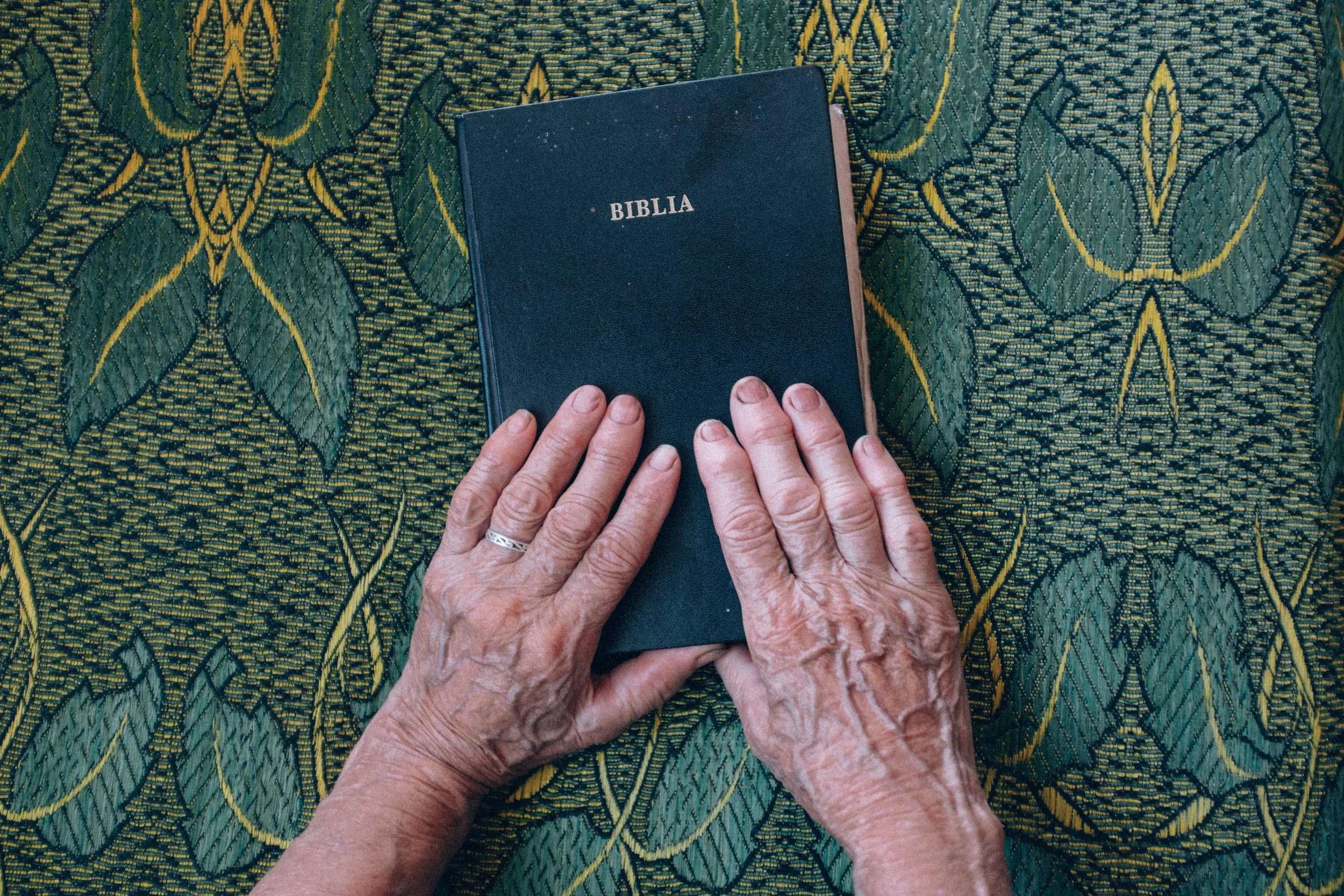
I’m a theologically conservative evangelical Christian who is ardently pro-life, pro-family, pro-traditional marriage. I’m also ardently pro-environment. All of these positions are connected and stem from my faith more than my politics (I did not vote for Clinton or Trump), particularly a glad acceptance of and respect for God’s created order.
In my mind there are clear and compelling reasons why a theologically conservative Christian should care about stewarding the environment, and I’ll list them below, with a little help from a Protestant named Francis (Schaeffer) and a Catholic named Francis (Pope). And maybe a friar named Francis too (of Assisi).
I think it’s important that Christians have a unified witness on this and resist the political partisanship that somehow occludes the more elemental truths involved. Man’s God-given task to steward the environment goes back to Eden and will continue until God sees fit to create anew. It’s a calling that is far older and far more significant than any temporal political program.
Partisan ideology or pressure from “It’s science, stupid!” types like Bill Nye are not good reasons to care for the environment. Nor should we be convinced by alarmist documentaries from Al Gore and juvenile tweetstorms from “I’m rich enough to only drive electric cars and only eat locally sourced food” celebrities.
Pragmatic arguments about overpopulation and limited resources are more compelling and reasonable, as is the economic argument that (rightly) highlights the benefits of environmental protections for spurring innovation in green technology and sustainable development. Compelling as they are, these are still pragmatic arguments and position the environment’s flourishing in sadly utilitarian terms. Isn’t there something in the goodness of nature itself that should motivate us to protect it from abuse? Yes.
Here are my arguments for why environmental protection should be a concern for conservative Christians:
1) Nature is valuable simply because God created it.
Nature is not valuable because of what it can do for us, but for what it is. Nature is a created thing, something that bears the signature of its creator and thus gives him glory (e.g. Psalm 19). The relationship between created things and their creator is crucial. Here’s what Francis Schaeffer (a tree-loving conservative evangelical) says in Pollution and the Death of Man (1970):
Simone Weil’s statement that modern man lives in a decreated world is acutely perceptive. Everything is decreated; everything is autonomous. But to Christians it is not autonomous, because God made it, and He made things on their own level. The value of the things is not in themselves autonomously, but that God made them… While we should not romanticize the tree, we must realize God made it and it deserves respect because He made it as a tree.
Created things, including humans, have intrinsic value simply because they are created by God. In mankind’s case there is a special dignity because man and woman are not only created by God but also in his image (Gen. 1:27). But the same principle applies to all created things, and Schaeffer summarizes it in this way near the end of Pollution: “If I love the Lover, I love what the Love has made.”
Pope Francis, in his 2015 encyclical (“Laudato Si”) on climate change and environmental stewardship, makes the case for an integral ecology that sees both abortion and environmental destruction as symptoms of a “misguided anthropocentrism”:
Our relationship with the environment can never be isolated from our relationship with others and with God. Otherwise, it would be nothing more than romantic individualism dressed up in ecological garb, locking us into a stifling immanence. Since everything is interrelated, concern for the protection of nature is also incompatible with the justification of abortion. How can we genuinely teach the importance of concern for other vulnerable beings, however troublesome or inconvenient they may be, if we fail to protect a human embryo, even when its presence is uncomfortable and creates difficulties?
2) Nature speaks truth about God, and we should not contribute to the silencing of this voice.
“The heavens declare the glory of God, and the sky above proclaims his handiwork” (Psalm 19:1). “For his invisible attributes, namely, his eternal power and divine nature, have been clearly perceived, ever since the creation of the world, in the things that have been made” (Rom. 1:20). This is the theological notion of general revelation. Nature bears witness to God in its createdness, whether in the truths revealed in trees or in thunderstorms or in Santa Ana Winds. St. Francis of Assisi captures it beautifully in his 13th century Canticle of Brother Sun and Sister Moon.
Part of honoring God is being present to what nature is saying in its givenness and being grateful for what it is before what it can do for us. We live this out by preserving the goodness of each given thing, whether a human, peach, honey bee or Jacaranda tree. We live this out by protecting these things from abuse but also manipulation, wherein the created goodness of something is mutated and marred because of some economic or otherwise selfish motive (as in genetically modified tomatoes or hormone-injected cows). In this way the drive toward “organic” food is a good thing, because it recognizes something about the health and beauty of nature in its givenness. Crucially, though, this also applies to the health and beauty of human bodies in their givenness. The same respect for God’s creation that leads us to avoid genetically modified food also leads us to avoid the temptation to hormonally alter our given body, surgically “re-assign” our given gender, or subvert God’s given design for the life-giving process of male-female procreation.
Here’s how Pope Francis articulates it in “Laudato Si”:
Thinking that we enjoy absolute power over our own bodies turns, often subtly, into thinking that we enjoy absolute power over creation. Learning to accept our body, to care for it and to respect its fullest meaning, is an essential element of any genuine human ecology. Also, valuing one’s own body in its femininity or masculinity is necessary if I am going to be able to recognize myself in an encounter with someone who is different. In this way we can joyfully accept the specific gifts of another man or woman, the work of God the Creator, and find mutual enrichment.
3) Environmental care speaks to the hope of the gospel.
The good news of Christ’s resurrection is good news for all creation, which groans for redemption (see Rom. 8:19–23). Christ reconciles all things (humans, animals, plants, etc.) to himself (Col. 1:20). If we are people of the resurrection, we ought not be apathetic about the flourishing of the physical world God has entrusted to us (Gen. 1:28). Here is Schaeffer again:
The Christian who believes the Bible should be the man who—with God's help and in the power of the Holy Spirit—is treating nature now in the direction of the way nature will be then [see Rom. 8]. It will not now be perfect, but there should be something substantial or we have missed our calling. God's calling to the Christian now, and to the Christian community, in the area of nature (just as it is in the area of personal Christian living in true spirituality) is that we should exhibit a substantial healing here and now, between man and nature and nature and itself, as far as Christians can bring it to pass.
Sin mars the relationship between man and creation. Fallen man “exploits created things as though they were nothing in themselves, and as though he has an autonomous right to them,” argues Schaeffer. But Christians, “who have returned, through the work of the Lord Jesus Christ, to fellowship with God,” should demonstrate the proper relationship between man and nature: “We are to have dominion over it, but we are not going to use it as fallen man uses it. We are not going to act as though it were nothing in itself or as though we will do to nature everything we can do.”
4) Environmental care showcases the beauty of limits.
Abuse of nature happens when man exerts limitless dominion over nature. It is anthropocentric arrogance that assumes animals and plants exist only to serve the whims and pleasures of man. For Schaeffer a healthy dominion has limits and seeks to honor what God has made, “up to the very highest level that he can honor it, without sacrificing man.”
Christians, of all people, should not be the destroyers. We should treat nature with an overwhelming respect. We may cut down a tree to build a house, or to make a fire to keep the family warm. But we should never cut down the tree just to cut down the tree… We have the right to rid our house of ants; but what we have not the right to do is to forget to honor the ant as God made it, in its rightful place in nature. When we meet the ant on the sidewalk, we step over him. He is a creature, like ourselves; not made in the image of God, but equal with man as far as creation is concerned. The ant and the man are both creatures.
This will necessarily impose limits on humans. Treating the land well “costs more money” and “usually takes longer,” notes Schaeffer, and it will force us to be more cautious about what technology makes possible. Modern man does everything he can do, using technology pragmatically with no reference point beyond human egotism, argues Schaeffer: “It is dog eat dog, man eat man, man eat nature. Man with his greed has no real reason not to rape nature and treat it as a reverse ‘consumer object.’”
This was the same sin of Adam and Eve in Eden: they were called to limit themselves, to refrain from doing something they could do. But they could not stay within this limit.
Limits are for our flourishing. God built them into the system in Eden, and to be rightly human is to be properly limited. Therefore, in contrast to the limit-transgressing tendencies of modern man, “The Christian does not do all he can do,” argues Schaeffer. “He has a limiting principle; and in doing less, he has more, for his own humanness is at stake.”
Pope Francis echoes this in “Laudato Si”:
Those who enjoy more and live better each moment are those who have given up dipping here and there, always on the lookout for what they do not have. They experience what it means to appreciate each person and each thing, learning familiarity with the simplest things and how to enjoy them. So they are able to shed unsatisfied needs, reducing their obsessiveness and weariness. Even living on little, they can live a lot, above all when they cultivate other pleasures and find satisfaction in fraternal encounters, in service, in developing their gifts, in music and art, in contact with nature, in prayer. Happiness means knowing how to limit some needs which only diminish us, and being open to the many different possibilities which life can offer.
5) Conservation is Conservative.
Environmental conservation is quite literally conservative. It’s about celebrating and conserving something good and God-given and not abusing it or remaking it out of some sense of human prerogative. This idea of conserving what is good is a conservative principle. “Conservatism is gratitude,” said Yuval Levin. Conservatism “encourages us to relish the givenness of things,” writes R.R. Reno in a First Things essay titled “Gratitude for the Given.” In that piece, Reno discusses Augustine’s comparison of use vs. enjoyment as ways we relate to the world. Whereas use “means taking up what is before us for the purpose of some greater end,” enjoying is simply gratitude: “resting in the blessing of its presence.” Reno uses the example of family as something we relate to in the mode of enjoyment, not use:
My family is not ideal. None are. But it’s mine, and that alone is a source of joy. I did not choose them; they did not choose me. This transcendence of purpose and usefulness gives our experience of family a sacredness that is the source of great consolation. My parents, siblings, children, aunts, uncles, and cousins are many things, but it is their givenness, their “assignment” to me, that allows me to rest in them.
This relates to the point above, about respecting and showing gratitude for God’s created good in its givenness. We don’t choose the color of trees or flowers or the movement of the clouds (anymore than we choose our own gender), and sometimes we might wish they were different. But the conservative approach is to accept these things and enjoy them anyway, resting in the fact of their createdness. Reno contrasts this view to modern liberalism, which he says “discourages rest”:
We must work in the present for the sake of the future. Everything is subject to improvement, which means we are required to forsake the mode of enjoyment. The injustices tolerated by our system of government cry out for remedy… Thus, the progressive mind disenchants reality so that we are not tempted to enjoy and rest in it. This has become the dominant approach of our era. Literature needs to be dissolved into race, class, and gender. Law students must be taught that the law serves as an instrument of power. The family is a factory of repression. Marriage is a patriarchal institution. What we receive as given is, at root, the present form of what the dead have used to advance their interests. Even the natural world is a vast arena of competition in which the fittest seek to survive, commandeering the flux of DNA for their own blind purposes. To enjoy is to be deceived and used by hidden others.
For conservative Christians, then, environmental conservation should be an obvious concern. Just as we are grateful for the givenness and concerned to conserve the family, the dignity of life, religious liberty and other good things, so too should we be concerned to conserve the natural creation and all of its God-given goods.
We Need to Be Re-Humanized
This week Donald Trump, Jr. tweeted a photo of an ad that compared the “Syrian Refugee Problem” to a bowl of Skittles. The ad suggested that we can best understand the worst humanitarian crisis of our time by thinking about refugees not as embodied, suffering people but as poisonous rainbow-colored candy that could kill us. Let’s set aside for a minute the politics of this and the admitted complexity of immigration and national security.

What does it mean that we are comparing real, fleshly, breathing human beings to pieces of candy? Are we so desensitized and disembodied that the real, physical, incarnational suffering of people on the other side of the world can only be understood in terms of candy-eating consumerism and our own self-preservation?
What does it mean that as a nation it is actually controversial to say something as self-evidently true as “black lives matter”?
What does it mean that police officers so easily resort to lethal force in confrontations with black men like Terence Crutcher (and Philando Castile and Alton Sterling and so many others) when non-lethal means are available to address a perceived threat?
What does it mean that savage examples of maiming and destroying bodies, whether via pressure cooker bomb or assault rifle or knife or delivery truck, are everywhere in the headlines?
What does it mean that our society has such an anemic and inhumane view of bodies that we casually dispose of unborn children, insisting that their bodies are not human but simply mounds of tissue to be removed as we would remove a tumor or cyst?
What does it mean that, when our bodies start breaking and causing us immense psychological and emotional stress, we can choose to end our lives via legal physician-assisted suicide?
What does it mean that we believe our “gender identity” is something wholly unrelated to our reproductive organs and biological realities, such that we can manipulate our bodies via surgery or hormone treatments to force it into the expressive identity we prefer?
What does it mean that forcing our bodies into preferred identities is something that also fuels billion dollar diet, fitness and pharmaceutical industries, in which we regulate and soup up our bodies like we would a car or a prized toy?
What does it mean that we care so much about organic, natural, non-genetically modified food but do not seem to find anything wrong with leveraging technology to modify our bodies and hormones to our liking?
What does it mean that sex has become a largely disembodied experience, a Tinder-fueled animal exchange divorced from commitment or, more commonly, simply a digital experience of screen-mediated orgasm?
What does it mean that our closest connection with fellow humans in crowded streets or coffeeshops is not eye-to-eye but bowed-head-to-bowed-head, as each of us engages a screen rather than the eternal, enfleshed beings sitting next to us?
It means we need to be re-humanized.
Andrew Sullivan’s recent New York Magazine essay, “I Used to Be a Human Being,” is his personal narrative of an increasingly universal problem: estrangement from ourselves (and each other) in a world where consumerism and technology and secularism and globalization and identity politics and more have combined to produced a rapidly de-humanizing world.
It seems we have adopted a sort of neo-Gnostic view of the body that treats it as something to be used, manipulated, controlled and harnessed in service of a nebulous Platonic idea of who we are.
What, if anything, can we do to re-humanize ourselves?
I think we can start by reducing our disembodied, mediated screen experiences and making more space in our lives for just being there in physical space, with physical people, present and talking and exploring the physical world together.
Another thing we can do is orient our lives more around the local and proximate than the global and abstract. The national news and Internet media machine is not all bad, but it can distract us from the much more graspable and changeable and beautiful communities right in front of us. Go to neighborhood gatherings; frequent local cafes and actually talk to people; prioritize local associations like community volunteer groups and churches.
One thing the church can do is preach and live a more robust theology of the body. The body is crucial to understanding Christianity, founded as it is on a God who became flesh and dwelt among us. Today's world is largely information based. We are bombarded with code and symbol and text every moment: cerebral stimuli to decipher. Christians are a people of the Word too, to be sure, but a Word that became flesh.
It matters that Jesus walked on this planet like we do, and sweat and bled and cried and hungered and desired like we do. It matters that he looks like us and we look like him, and that we are walking icons of the God whose image we bear. The Incarnation of Christ means it matters that we are human, and that we are here. Every life, every body, from the baby in the womb to the chronically ill octogenarian, matters.
We are not skittles; we are not statistics; we are not machines; we are not tissue masses; we are not politicized abstractions.
We are humans.
Following Christ, Relinquishing Rights
Christians: Being like Christ does not mean looking out for your self-interest and safety and comfort and rights above all else. Being like Christ means thinking of others before you think of yourself; prioritizing the safety of others above your safety; willingly ceding your power and privilege and guns and freedom out of love for the powerless, the underprivileged, the weak and the vulnerable.
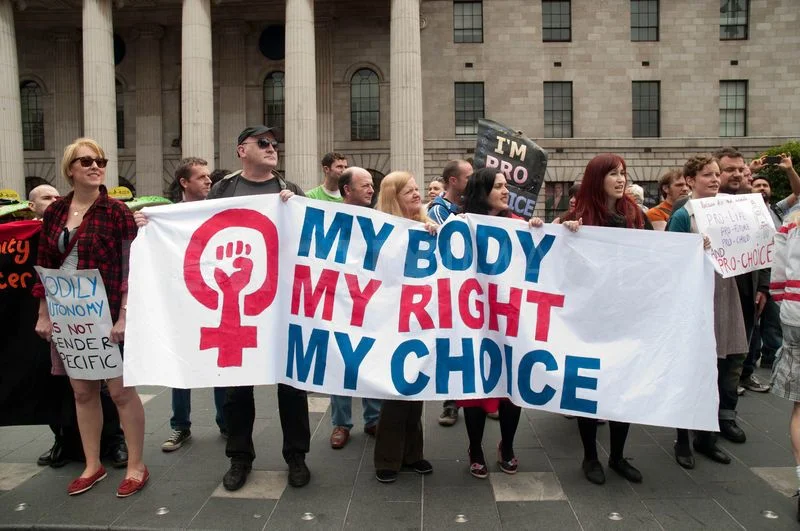
Last fall, around the time when Donald Trump first made his infamous call to ban all Muslim immigration to the United States out of fear that it may be a “Trojan Horse” of terrorist infiltration, I wrote a blog post calling for Christians to welcome immigrants and refugees, even if it is costly to us. I wrote:
The way of Jesus Christ is not closing doors to asylum-seeking refugees or building walls to keep out foreigners. The way of Jesus Christ is not about forsaking the well-being of others in order to protect one’s own livelihood. The way of Jesus Christ is the cross. It is the way of sacrificing one’s own well-being in the name of love for others, however uncomfortable or risky or countercultural that may be.
Seven months later, after the tragedy in Orlando and after Donald Trump has reiterated his “ban” and after his support has broadened (even among Christians) beyond what any of us could have imagined, I think the point needs to be made again.
Christians: Being like Christ does not mean looking out for your self-interest and safety and comfort and rights above all else. Being like Christ means thinking of others before you think of yourself; prioritizing the safety of others above your own safety; willingly ceding your power and privilege and guns and freedom out of love for the powerless, the underprivileged, the weak and the vulnerable.
Fear-driven self interest is everywhere in America today, with everyone prioritizing their well-being and liberty above that of others. Inflammatory media, social media polemics and identity politics-fueled outrage have led us to a nihilistic, no-shared-anything place where individuals are left to simply fight for their sacrosanct rights: to say offensive things publicly because #FirstAmendment, to own automatic weapons because #SecondAmendment, to abort unwanted babies, to demand access to jobs that immigrants might take for cheaper pay, to demand free healthcare or lower taxes, to demand gender-specific or gender-neutral bathrooms, to marry whomever we want to marry, to serve wedding cake to whomever we please, etc.
But this is not the Christian way. The Christian way is to set our rights aside when they are an an impediment to the love and grace of the gospel, let alone when they endanger the safety of others. Does this mean we never appeal to our rights? No. Paul himself appealed to his rights as a Roman citizen when he was about to be flogged (Acts 22:25). Does this mean we fully surrender our freedom to believe certain beliefs and to live our lives consistently with those beliefs? No. But it may mean we exercise our freedoms more quietly or that we cede some of our freedoms for the sake of others’ flourishing. It may mean we open ourselves up to inconvenience and discomfort and pain.
This is a hard truth for Christians, but it is a foundational truth in our faith. The New Testament is full of calls to follow Christ’s model of humble, self-effacing and status-relinquishing love (Phil. 2:5-8); to submit to one another out of reverence for Christ (Eph. 5:21), to consider others more important than yourself (Phil. 2:3), to see freedom in Christ not as a weapon but as an opportunity to serve others in love (Gal. 5:13-15), to serve our neighbors before we serve ourselves (Rom. 15:1-3), and so on.
This is the upside-down, countercultural nature of the kingdom of God, and Christians in today’s world have an opportunity to reclaim our witness as emissaries of this “others before myself” kingdom.
We can reclaim it by:
- Giving up our right to voice our opinions loudly and immediately on social media or blogs, even if it means we don’t get to take part in juicy debates and even if the void of our silence is filled by less informed, less civil voices.
- Giving up our pulpits and platforms from time to time, inviting underrepresented voices to speak in our place, even if it means we don’t control the narrative or the theology as perfectly as we might prefer.
- Giving up our right to access military-style assault rifles like the AR-15, the common killing denominator in most of America’s recent mass shootings, even if the Second Amendment protects that right and even if we’re forced to stock our self-defense arsenal with less efficient weaponry.
- Giving up our Washington D.C. access cards and “insider” political influence and opting for a more consistent moral witness as exiles on the margins of power, even if it means we’re no longer a coveted voting bloc and even if religious rights are further eroded because of it.
- Giving up our comfort and security by opening our national and state borders, as well as our homes and our churches, to refugees and immigrants, even if it costs us tax dollars, jobs, safety, etc.
- Giving up our rights to choose to do whatever we want to do with our bodies (sexually, reproductively) because we defer to God’s design and ownership of our embodiment, even if that undermines real desires we feel and even if such self-denial is widely viewed as repressive.
- Giving up our rights to plan parenthood and plan baby genetics and plan our time of death and plan our bodily functions and rhythms, even if it’s inconvenient to us and even if it goes against mainstream society’s supreme value of personal autonomy.
- Giving up our right to display the Confederate flag, even if it means undermining Southern cultural pride and apologizing for things we didn’t ourselves do.
- Giving up our right to attend a homogenous or culturally comfortable church, even if it means we subject ourselves to cross-cultural stress and discomfort in worship.
- Giving up our rights as Christian institutions to function entirely free from government intrusion, even if it means we cede some of our religious freedom and even if it means we make accommodations we might prefer not to make.
- Giving up our right to ignore the degradation of God’s created world and deny a human role in climate change, even if it means we inconvenience ourselves by using less water, crowding into public transit more often and paying more for eco-friendly things.
The list could go on. There are thousands of ways, large and small, that Christ-followers can be like Christ in their day-to-day lives, humbling themselves and forsaking their freedom, power, privilege, status, convenience, comfort and/or safety for the sake of the other. If we humble ourselves in this way, the name of Christ will be high and lifted up (descent followed by ascent, as in Phil. 2:5-11). He will increase as we decrease (John 3:30). His name will be magnified when his followers live in the manner Paul describes in Philippians 3:8: “Indeed, I count everything as loss because of the surpassing worth of knowing Christ Jesus my Lord. For his sake I have suffered the loss of all things and count them as rubbish, in order that I may gain Christ.”
Abortion, the Environment and the Exile of Autonomy
How is it that our society can collectively agree that an unborn life lost to a miscarriage is something to lament but the loss of millions of unborn lives each year from abortion is not? Karen Swallow Prior pondered this question recently, calling out the contradictory yet widely held idea that unborn children are babies whose lives matter [...]
How is it that our society can collectively agree that an unborn life lost to a miscarriage is something to lament but the loss of millions of unborn lives each year from abortion is not? Karen Swallow Prior pondered this question recently, calling out the contradictory yet widely held idea that unborn children are babies whose lives matter when they are desired but disposable (or sellable) fetal tissue when they are not desired. By this logic the definition (let alone value) of an unborn life rests solely on the intent of mom and dad: a baby’s life matters insofar as it fits into the timing and plans of its parents.
In this way we can see how Planned Parenthood is the perfect name for an organization that is mostly known for abortion. Ending a life because its timing doesn’t line up with our plans and preferences assumes a God-like right to power that the name “Planned Parenthood” implies. It casually asserts that the greatest, most mysterious reality of existence – the creation of a new life – is something that can be planned, manipulated, defined and controlled according to our convenience. It celebrates our sovereign autonomy and refuses sacrifice, symptomatic of man’s worst tendencies going all the way back to Eden. Back then we didn’t like to be told that we can’t have everything on our terms, and we still don’t.
An arrogant assumption of control is at the root of most evil, and it goes far beyond the issue of reproduction.
The same fallen impulse that leads us to assert the right to abort an “unplanned” pregnancy also leads us to assert the right to use and abuse creation as befits our lifestyle, regardless of its longterm consequences.
Many of the same Christian politicians who push for legislation restricting abortion are also those who never vote for legislation restricting environmental pollutants. But isn’t there at least some logical link between protecting the created beings of unborn life and protecting the created world that declaresGod’s glory?
As Pope Francis recently pointed out in his sprawling encyclical on a Christian ethic of environmental stewardship (“On Care for Our Common Home”), care for the unborn and care for the natural world are both essential outgrowths of a consistent theology of life:
“Concern for the protection of nature is also incompatible with the justification of abortion. How can we genuinely teach the importance of concern for other vulnerable beings, however troublesome or inconvenient they may be, if we fail to protect a human embryo, even when its presence is uncomfortable and creates difficulties?”
The Pope is right to connect the two issues, which both deal with man’s tendency to exert his dominion in careless and life-devaluing ways:
“When we fail to acknowledge as part of reality the worth of a poor person, a human embryo, a person with disabilities – to offer just a few examples – it becomes difficult to hear the cry of nature itself; everything is connected. Once the human being declares independence from reality and behaves with absolute dominion, the very foundations of our life begin to crumble.”
Though a small-but-vocal minority of evangelicals see this connection and support the passing of clean energy legislation, most pro-life Americans throw the eco-friendly baby out with the liberal bathwater. This is unfortunate, because it undermines what could be a powerful and consistent articulation of a deeply Christian ethic of life – an ethic that says the rightly ordered miracle of God’s creation must be respected and valued even when it is inconvenient, costly or in conflict with our “plans.”
It is this same ethic that also insists that God knew what he was doing when he created gender and marriage. Here is Pope Francis, again from “Laudato Si,” making the connection:
“Thinking that we enjoy absolute power over our own bodies turns, often subtly, into thinking that we enjoy absolute power over creation. Learning to accept our body, to care for it and to respect its fullest meaning, is an essential element of any genuine human ecology. Also, valuing one’s own body in its femininity or masculinity is necessary if I am going to be able to recognize myself in an encounter with someone who is different. In this way we can joyfully accept the specific gifts of another man or woman, the work of God the Creator, and find mutual enrichment.”
We should decry Bruce Jenner asserting his dominion over creation by claiming he has absolute power to choose his gender; and we should lament the tragedy of a woman who claims she has absolute power to end her unborn child’s life; but we should also take offense at those who claim an absolute power to consume resources selfishly and wastefully, with no regard for the flourishing and sustainability of creation. The man who drives a needlessly fuel-inefficient car, disregards watering restrictions and takes long showers in the midst of a drought is just another version of the arrogant assumption of control that leads to lunchtime discussions of fetal tissue commerce over wine and salad.
All of these postures stem from man’s resistance to accepting God as God and fully respecting the way He created things to be. When push comes to shove, we want things our way, and we want God to respect that.
How childish. We grow up only insofar as we learn to be OK with not getting what we want, however and whenever we want it. As Carl Trueman recently pointed out, one hallmark of childishness is “an ethic built upon personal pleasure and convenience.” By that measure our society is about as childish as they come.
I love Psalm 131’s picture of David having “calmed and quieted” his soul “like a weaned child with its mother.” He does not dwell on his fickle wishes or desires for “things too great and too marvelous for me.” He is satisfied with his Lord, where his hope resides. A lesson for human flourishing if ever there was one.
Contentment is the antidote to our sinful propensity to desire control. Contentment with parenthood even when it isn’t planned. Contentment with unrealized sexual and relational longings even when it’s painfully lonely. Contentment with restrictions on pollution even if it costs us profits or convenience.
“Christian contentment is that sweet, inward, quiet, gracious frame of spirit, which freely submits to and delights in God’s wise and fatherly disposal in every condition.”
That’s what English Puritan Jeremiah Burroughs wrote in his 17th century work, The Rare Jewel of Christian Contentment. It’s a radical idea for people today, suspicious as we are of submitting to any authority outside the self. And yet it’s so needed.
But how is contentment like this achieved, especially in a world where “have it your way!” and “gimme more” are the dominant slogans of success?
Burroughs says a “Christian comes to contentment, not so much by way of addition, as by way of subtraction.” He rightly describes the world as being “infinitely deceived in thinking that contentment lies in having more than we already have.”
Indeed. And it is this “grass is always greener” consumerist mentality, so present in our culture and even in Christianity (e.g. church “shopping”), that perpetuates our control obsession. If we are constantly told we can dispose of unborn life or change our sex on demand, or that we can eat whatever food we want at any time of year, or that we should just “let go” of any restrictions placed on us (“No right, no wrong, no rules for me. I’m free!”), then of course we are going to begin to believe that we are master and God is not.
But living in this way is not as freeing as Elsa might think. On the contrary, an embrace of limits and “less is more” simplicity is what really frees us up to experience joy.
This is something Pope Francis mentions in “Laudato Si” as he describes Christian growth in terms of “moderation and the capacity to be happy with little,” as well as the avoidance of “the dynamic of dominion and the mere accumulation of pleasures.” This is “not a lesser life or one lived with less intensity,” he notes:
“On the contrary, it is a way of living life to the full. In reality, those who enjoy more and live better each moment are those who have given up dipping here and there, always on the lookout for what they do not have. They experience what it means to appreciate each person and each thing, learning familiarity with the simplest things and how to enjoy them. So they are able to shed unsatisfied needs, reducing their obsessiveness and weariness…”
The reality is a life of sacrifice and simplicity is a more satisfying life. A life of relinquishing our obsession with control and getting over our resistance to authority is more free. It’s the life we were meant to live.
“For whoever would save his life will lose it, but whoever loses his life for my sake will find it.” (Matt. 16:25)
As Joshua Ryan Butler argues in The Skeletons in God’s Closet, “The cost of union with Christ is the death of our independence; the cost of true worship is the exile of our autonomy.”
May the exile of our autonomy always be a cost we’re willing to bear.
Why I Cannot Vote for Obama
I really want to vote for Obama. There are a myriad of reasons why it would thrill me to cast my vote for him on November 4. He is such an attractive and inspiring figure, and I'm not just saying that because it's the standard line about Obama. It's true.
It would be so nice to have a president who is smart, articulate, even-keeled, poised, intellectual, and (it seems) genuinely passionate about helping downtrodden people.
I've been impressed with the way he's handled himself on the campaign trail (certainly moreso than I have been with McCain), and I've more than once considered the possibility of voting for him.
At the end of the day, though, we have to look past all the promises and rhetoric of a presidential candidate and look at their record. In Obama's case, it's not all that extensive or especially committal (it's clear that Obama was planning for the presidency from his very first days in the Illinois legislature). But there are things about his record that really frighten me, and chief among them is his far-left stances on abortion.
Based on his record, Obama is the most pro-abortion presidential candidate in history. If you don't believe that, read this article.
In it, Robert George, Princeton professor and renowned ethicist, summarizes Obama's abortion record, and it is ugly. He begins by stating:
"Barack Obama is the most extreme pro-abortion candidate ever to seek the office of President of the United States. He is the most extreme pro-abortion member of the United States Senate. Indeed, he is the most extreme pro-abortion legislator ever to serve in either house of the United States Congress..."
The full article is truly eye-opening and disturbing, and I urge all of you to read it. If there is any part of you that is convicted about abortion and would like to see it lessened in America, you must consider Obama's record carefully before you consider voting him into office.
I know, I know, people will retort that George W. Bush—possibly the most pro-life president in history—didn't really do much to advance the pro-life cause. So why should I expect any different from McCain?
Well, it's not about what McCain will or will not achieve on abortion. It's about what an Obama administration would do to scale back abortion restriction laws and undo years of pro-life advances. If the democrats win a super majority in congress and Obama is elected president, we could be in for the biggest step back for the pro-life movement in history.
This may make me a "single-issue" voter, but so be it. I agree that "pro-life" goes beyond abortion—encompassing issues of poverty, the death penalty, even the environment… But abortion is a huge and important part of what it means to affirm the sanctity of life, and Obama's cavalier legislative approach to it truly disturbs me.
I will not be crushed if Obama becomes the president; in some ways I'll be very happy. But I'll be praying that his tenure as president does not even go near abortion issues. It is that fear—that Obama will in his presidency be the pro-abortion extremist he has been as an Illinois legislator and U.S. Senator—that prevents me from voting for him.
Abortion as Art? (Critical Theory Gone Berserk)
By now you’ve all probably heard about Yale Abortion Girl, right? Her name is Aliza Shvarts, and she’s a senior art student at the esteemed Ivy League school. She made international news last week when her outrageous senior art project was made public.
According to Shvarts, her project is a documentation of a nine-month process in which she artificially inseminated herself (from a number of sperm donors) “as often as possible” and then took herbal abortifacient drugs to induce miscarriages. The actual project was to be an installation of a large cube suspended from the ceiling of the exhibition hall, filled with the menstrual blood from her supposed litany of miscarriages. Recorded video of her experiencing the miscarriages in her bathtub was to be projected on each side of the cube.
Schvarts initially defended the project by saying, “I believe strongly that art should be a medium for politics and ideologies, not just a commodity… I think that I’m creating a project that lives up to the standard of what art is supposed to be… It was a private and personal endeavor, but also a transparent one for the most part… This isn’t something I’ve been hiding.”
But as news circulated beyond Yale and outraged criticism came pouring in, Yale put a kibosh on the project, which was supposed to be installed for the senior art show last week.
“I am appalled,” said Yale College Dean Peter Salovey. “This piece of performance art as reported in the press bears no relation to what I consider appropriate for an undergraduate senior project.”
School of Art Dean Robert Storr also denounced Schvarts’ project, saying that while Yale “has a profound commitment to freedom of expression,” the University “does not encourage or condone projects that would involve unknown health risks to the student.”
Soon after the initial hubbub, however, the University officials announced to the press that Shvarts had privately denied actually committing the acts in question, and that the whole project was nothing more than an elaborate hoax—a “creative fiction” meant to highlight the ambiguity of the relationship between art and the human body.
Shvarts responded by calling the University’s claims “ultimately inaccurate,” and refused to sign a written confession saying that the whole thing was a hoax. Instead, Shvarts began a “no one knows the truth except me” campaign of meta-meta-meta critique. And arguably, this is when her “project” kicked in to high gear.
Shvarts told the press that throughout the nine months she never knew if she was ever really pregnant or not (she never took a pregnancy test), and in a column for the Yale Daily News, Shvarts wrote that "The reality of the pregnancy, both for myself and for the audience, is a matter of reading."
Huh? Being pregnant is a matter of reading? This is where it becomes clear what Schvarts is really up to—an amped-up deconstructionist exercise in sexual semiotics.
“The part most meaningful in [the project’s] political agenda … is the impossibility of accurately identifying the resulting blood,” Shvarts wrote in the same column. “Because the miscarriages coincide with the expected date of menstruation (the 28th day of my cycle), it remains ambiguous whether there was ever a fertilized ovum or not.”
"This piece — in its textual and sculptural forms — is meant to call into question the relationship between form and function as they converge on the body," she wrote. "…To protect myself and others, only I know the number of fabricators who participated, the frequency and accuracy with which I inseminated and the specific abortifacient I used. Because of these measures of privacy, the piece exists only in its telling."
Ahh, the crux: the piece exists only in its telling. With no more metanarratives, no external “Truth,” we can only trust individual perceptions, personalized accounts of experiential contingencies. What a wonderful world.
There is a lot to be disturbed by in this little viral provocation. Of course, the cavalier treatment of pregnancy and abortion (as mere tools in an artistic creation—even if just on the conceptual level) is one thing; and the notion that anything so disgusting (a cube of menstrual blood from self-induced abortions?) could be considered art is another…
But the most frightening aspect of this whole thing, for me, is that it shows just how inaccessible (and out of fashion) truth is in the academy today. When someone like Shvarts can blatantly lie to the press and write it off as part an academic project, what does that say about our academic standards? Where would she get the idea that education (formerly known as the search for truth) can be founded on lies and the privileging of ambiguity?
Hmmm, well, she can get that idea from at least 20 years of critical theory, for starters. This is the strain of scholarly thought that puts truth on the backburner (if it doesn’t dispose of it entirely) in favor of a view of reality as a contested space in which nothing is certain, everything has to do with power imbalances, and ambiguity (re: “complicating, problematizing…”) is the end of all academic pursuit. She also gets this idea from radical feminism, which in saying “the personal is the political” situates the human body in a discursive battleground of contextual ideologies that laughs off the idea of transcendent morality or gender.
Shvarts’ project shouldn’t come as too much of a surprise, then, and Yale should look no further than their own professors if they want someone to blame. If we teach our students that all reality is perceptual, all morality personal, and all truth a narrativized fiction, “Abortion Girl” is the least we should expect.
Am I Missing Something?
Evidently I'm the only film critic in America who isn't convinced that Lake of Fire--the new abortion documentary from Tony Kaye--is the hyper-balanced, exceedingly fair film it's been touted as. My 2 star review for Christianity Today is listed at Rottentomatoes.com as the only "rotten" rating, thereby bringing the film's total percent score down from 100% positive to 96%. This both thrills me (b/c this film does NOT deserve a perfect rating) but also worries me. What are the other critics missing? Or what am I missing?
Here's an excerpt from my review of Lake of Fire:
Coming in to the film, one expects (or at least hopes) that it will be a thoughtful consideration of the issues at stake in the ongoing abortion debate. Heaven knows we are desperate for a congenial sit-down in which all perspectives, arguments, and scientific evidence are presented and considered evenly—apart from personal attacks, cynicism and vitriol. But in this respect the film is a huge letdown—a wasted opportunity to truly consider the issue/act of abortion and its moral meaning.
Instead, we get a lopsided parade of talking heads in which well-mannered, intellectual liberals (Noam Chomsky, Alan Dershowitz, Peter Singer) represent the pro-choice viewpoint and firebrand country bumpkin fundamentalists represent the pro-life side. Defenders of the film might point out that the brunt of screen time goes to Christians and pro-lifers, which is true. But the majority of time devoted to the "pro-life" contingent centers upon the fringe extremists who picket and sometimes bomb abortion clinics, and occasionally assassinate abortion doctors. This is the face of the pro-life movement, as represented in Lake of Fire. (read more...)
It seems to me that this film represents the strangely paradoxical nature of representational politics in the media. On one hand, we are an extremely PC culture in which all races, orientations, minority groups, etc are supposed to be given a fair representation (either in film, or TV, or print media, etc). In my classes in graduate school, this is a HUGE emphasis: the ways in which we should critique media for uniformed, unfair, or otherwise skewed portrayals of minority groups.
An unwritten assumption for many such "progressives" in academia or media, however, is that Christians are NOT to be included in the "minority groups abused by the media" category. Perhaps it is because Christians are perceived to be part of the hegemonic "establishment": the WASP-dominated coalition that wields all the power and money and spits out hate and bigotry. Surely this group needs no advocacy when it comes to fair media portrayal. If anything Christian representations should be actively and visibly dismantled or lampooned in the media. Or so goes the unspoken rhetoric.
Does anyone else see the contradiction here? Why, in film after film, are Christians being portrayed so unfavorably? Sure, you can't say that the people in Jesus Camp or Lake of Fire weren't asking for it, but there are plenty of other more moderate Christians who could have been featured just as easily. Documentaries (and any media, really) are in the business of selection. They reveal their bias through the choices of what and who--given all the options--is highlighted or used to "stand in for" a larger group or phenomenon.
While we scramble to fill quotas and level the socio/economic/cultural playing fields through media literacy programs and multicultural initiatives, some groups are glaringly omitted out of spite. And while the call for universal tolerance rings ever more loudly, the intolerant squelching of certain voices (i.e. intelligent, albeit exclusivist Christians) continues unchecked. I'm not calling for some reverse Affirmative Action or anything, but I do think the illogical nature of it all deserves some careful scrutiny.