Music Overload and the Escape of Nostalgia
Hipster coffeeshops are not playing the hipster music of today. They are playing the hipster music from 10-20 years ago. Why?
In recent years I have noticed that in most hip coffeeshops (which are innumerable in Southern California, and which are often my “offices”), the music being played is not current. Rather, it is the hipster music from 10-20 years ago (give or take). Instead of Weyes Blood, it is Bon Iver’s For Emma, Forever Ago. Instead of Vampire Weekend’s excellent new release, Father of the Bride, it is Vampire Weekend’s debut album from a decade ago. It is not The National’s new music. It’s “Baby, We’ll Be Fine.”
Just this week I delighted when I heard songs from Radiohead’s In Rainbows in a coffeeshop, and Lauryn Hill’s The Miseducation of Lauryn Hill in another. Currently I’m at Philz and Frank Ocean’s “Lost” (2012) is playing. These are not “oldies” by any means, but they are just old enough to be largely filed away in forgotten areas of our ever-more-beleaguered brains.
Why? Because our brains are utterly overwhelmed in today’s crowded cultural landscape. We file away and forget amazing music from last month, let alone last year. There is just too much.
In a presentist world, the recent past is the new radical. The ability to recall the cutting edge is the new cutting edge. To signal taste is no longer to discover the Next Big Thing. It is to recover the Best Forgotten Things.
Spotify and other streaming sites, combined with the ever-easier mechanisms of DIY music production, have exploded our access to music. There is more and more music being made every day (much of it very good!), and all of it is accessible to anyone with a streaming account. This is changing many things about the music industry, but it’s also changing the consumer experience.
I try my hardest to keep up on new music. I maintain a “best of the year” playlist on Spotify every year, which I add to as each year goes on and I come across good songs. Here is my “Best Songs of 2019” playlist as it stands now, halfway through the year. This is my feeble attempt to “keep up” and celebrate emerging artists and their current output, but honestly it is nearly impossible. Given the choice between scouring the vast horizons of new music for the best quality, and re-discovering the gems of years (and decades) past, the latter increasingly appeals to me.
That’s why the coffeeshop music trend is what it is. That’s why more and more current artists are finding musical inspiration in cover songs (I have an ongoing playlist of interesting new covers here). The best of the past brings sanity to the glut of the present.
As the array of options in culture keeps increasing (not only music, but also the insane explosion of quality TV on Netflix, Amazon Prime, etc), and with it the pressure to check out this “must see” show or that “must listen” album, I suspect more of us will be tempted to retreat to the time-tested gems of yesterday.
Better Than Our Best Days
I sometimes imagine that in heaven, one of the joys of living in eternity will be that we'll have the ability to re-live the best days and best memories from our earthly lives. But I know that in heaven, all these transient things (such as 24-hour periods we once called "days") will be quaint memories compared to the "eternal weight of glory beyond all comparison" we will be experiencing.
"For this light momentary affliction is preparing for us an eternal weight of glory beyond all comparison, as we look not to the things that are seen but to the things that are unseen. For the things that are seen are transient, but the things that are unseen are eternal." (2 Corinthians 4:17-18)
Do you ever think about the best days of your life? Not as in a certain year or season in your childhood, but specific days. The best 24-hour periods of your life.
Kira and I often ask each other at the end of a year, or on an annual milestone like a birthday or anniversary, to remember the single best day of that year. It's fun to relive them. And yet it is a bittersweet thing too, because you realize that you can never relive these best days. They exist only in memories and pictures, and even those things fade with time.
I sometimes imagine that in heaven, one of the joys of living in eternity will be that we'll have the ability to re-live the best days and best memories from our earthly lives. I'll be able to return to that memory of lying in the grass and watching shooting starts at a Wisconsin summer camp as a child; or the time I spent in Oxford and Cambridge the summer after I graduated from college; or New Year's Eve, 2016, wandering around the churches of Rome and ending with a wine tasting dinner to ring in the new year in the Piazza Navona.
But I know that in heaven, all these transient things (such as 24-hour periods we once called "days") will be quaint memories compared to the "eternal weight of glory beyond all comparison" we will be experiencing.
And in reality, the "heavenly" nature of the best days of our earthly lives is, if we're honest, more about a longing for permanence than the actual pleasures experienced in the moment. We want the days to linger. We want them to repeatable. And our awareness of their fleeting ephemerality is, strangely, part of what makes them so joyful.
Have you noticed that the most transcendent times in life often are the moments of ending, when the passing away of things is most apparent? It's the flight home after an amazing experience. It's the campfire on the last night of camp. The final song of a powerful concert. For me it's the memory of the closing worship service of Oxbridge 2005 in King's College Chapel, Cambridge. Or it's simply a sunset: the nightly, universally magnetic elegy for daylight.
Humans are instinctively moved by sunsets, intuitively aware that they are "beautiful." Why? I think it's because the sunset is the daily rehearsal of the reality that "the things that are seen are transient, but the things that are unseen are eternal" (2 Cor. 4:18). It's the visible affirmation that it is the temporality of this life that is the most beautiful, because it points beyond itself. It is not the oranges and reds and purples of a sunset that are the most beautiful; it's the fact that the colors are so dramatic, the sky so fiery and electric, for only a few moments. Then gone.
It's a gut-level awareness we can hardly put into words, but C.S. Lewis does as good a job as anyone in his various writings about longing and joy and Sehnsucht. Take this section of The Weight of Glory:
“The books or the music in which we thought the beauty was located will betray us if we trust in them; it was not in them, it only came through them, and what came through them was longing. These things—the beauty, the memory of our own past—are good images of what we really desire; but if they are mistaken for the thing itself, they turn into dumb idols, breaking the hearts of their worshippers. For they are not the thing itself; they are only the scent of a flower we have not found, the echo of a tune we have not heard, news from a country we have never yet visited.”
The hope of Christianity is the hope of resurrection; it's the hope of the sunrise. It's a promise that the temporal, here-and-then-gone beauties of this life are mere teasers for the world to come.
The worst day in heaven will be better than our best days on earth. That's not an excuse to just endure this life and wait to "escape" to heaven. It's a hopeful invitation to dig in deeper into the beauty of this world: every experience, every song, every sunset.
The Politics of Nostalgia
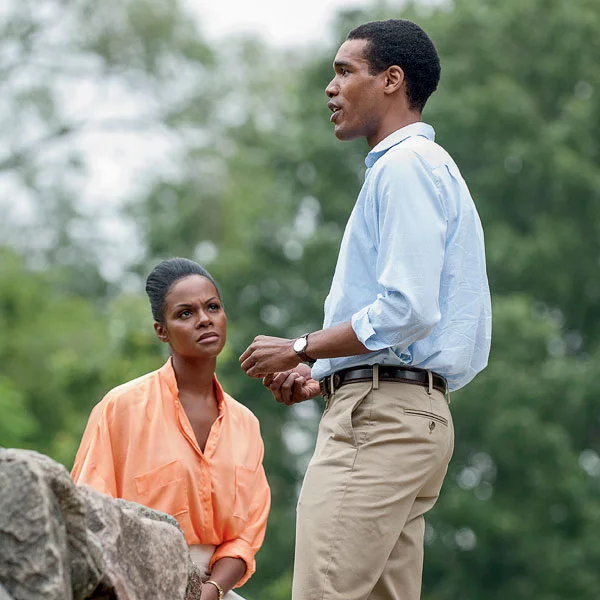
Richard Tanne's Southside With You, a compelling cinematic depiction of the first date of Barack and Michelle Obama (played brilliantly by Parker Sawyers and Tika Sumpter), is on one hand a smart romance in the vein of Richard Linklater's Before Sunrise trilogy or James Ponsoldt's The Spectacular Now. It's a quiet, simple love story that captures the innocence, awkwardness and impermanence of the early days of relationships. Southside is a snapshot of a couple of lawyers in 1989 Chicago who two decades later would be ruling the free world in the White House. That's the obvious hindsight angle that makes the film interesting as narration of a particular m
Richard Tanne's Southside With You, a compelling cinematic depiction of the first date of Barack and Michelle Obama (played brilliantly by Parker Sawyers and Tika Sumpter), is on one hand a smart romance in the vein of Richard Linklater's Before Sunrise trilogy or James Ponsoldt's The Spectacular Now. It's a quiet, simple love story that captures the innocence, awkwardness and impermanence of the early days of relationships. Southside is a snapshot of a couple of lawyers in 1989 Chicago who two decades later would be ruling the free world in the White House. That's the obvious hindsight angle that makes the film interesting as narration of a particular moment in history. There are also important lenses of race that make the film decidedly relevant as a commentary on where we were and where we are in America on that front. Spike Lee's Do the Right Thing makes an important cameo in the film and black identity is front and center.
But I also think Southside is a piece of political nostalgia, an homage to a more innocent and purer form of politics, especially in light of the nasty, jaded, apocalyptic state of politics in 2016. Southside is as much about exploring the nascent political passions of Barack and Michelle as it is about capturing their romantic attraction to one another. Tanne does a brilliant job infusing bits of background, personality and ideology into these characters (even a passing mention of religion), providing glimpses of what ultimately inspired them to enter politics.
The idealism of Southside's Obama-era political reminiscence (epitomized in a community organizing scene where young Barack flexes his impressive rhetorical muscles to rally a crowd around the politics of common good compromise rather than zero sum aggrievement) is a good example of what Yuval Levin describes in The Fractured Republic as the "exceedingly nostalgic" political life of contemporary America. Levin's excellent book sees today's political gridlock and cultural malaise as byproducts of the "stranglehold of midcentury nostalgia on our common life."
Though Southside's nostalgia isn't based in midcentury America, it is an idealistic looking back nonetheless. Like so much of the political discourse and cultural artifacts of contemporary America, it opts not to grapple with present challenges as much as to pine for the glory days, or at least to temporarily retreat into an rosy conjuring of them.
In his book Levin situates political nostalgia within a broader cultural narrative in which the constant innovation and rapid cultural change of the 20th century has slowed in the 21st, where now "an extraordinary number of our most prominent cultural creations are homages to the experience of the past two generations."
Think of Stranger Things, for example. The show captured the most buzz of perhaps anything in American pop culture this summer, and yet its appeal is largely if not wholly derived from its recapturing of 80s pop culture in the vein of Steven Spielberg, Stephen King and Winona Ryder.
Meanwhile 8 of the top 10 films at the box office this summer, and 7 out of the top 10 grossing films of the 21st century, were either sequels or franchise films. From Fuller House to The Get Down, Narcos to The People vs. O.J. Simpson, Everybody Wants Some to The Nice Guys, everywhere you look it seems pop culture is finding inspiration more in the recent past than in the complicated present.
Levin observes that pop culture innovation is less dramatic as it was in the last century: "If you were shown photos of Americans on a city street in 1955, 1975, and 1995, you would have no trouble telling which was which. But distinguishing 1995 from 2015 by looking at clothing, art, music, or design would not be easy at all."
Why is this? Levin suggests the culprit is the expressive individualism and technology-amplified consumerism of our society, in which everything can be narrowcast and tailored to individual tastes and preferences:
"The solipsism inherent in our expressive individualism propels this culture of nostalgia: if everything is set up to give us what we want, it will all tend to give us what we already know, since our desires often just aren't very imaginative. Our culture as a whole will, like each of us, tend to become what it already is."
What is ironic about Southside is how perfectly it demonstrates the nostalgic whirlpool of our nation's arrested development in 2016 while simultaneously appealing to the notion of change as one of Obama's primary trademarks. Indeed, though Obama campaigned on change and carried a message of a new sort of politics, the reality of America in the Obama era has been one of unprecedented division, sluggish economic growth, and (above all) nostalgia for the past rather than hope in the future. That we have a "nostalgic for the early Obama" movie already, even while he is still in the White House, is case in point.
There is a lot of complexity to deal with in American today and much of it will require new models and new thinking. Yet we are stuck in the past. Some are dreaming of a vaguely "great again" America of yesteryear. Others are mournfully basking in the glow of the progressive promise of the young Obamas. Is there anyone who would take up the challenges of our world with truly forward-thinking gusto and outside-the-box innovation? I truly hope so.
Nebraska
Watching Nebraska, I recognize and identify with Payne’s love/hate relationship with the places he is from. On one hand there is a sort of “I’ve moved on” distaste, which dwells on the provincial smallness and embarrassing insulation of the yokel customs. On the other is a profound affection and nostalgia for its simplicity, slow pace and settledness in rhythms and rootedness.
Alexander Payne’s Nebraska is road movie. It’s about a father and son (Bruce Dern and Will Forte) who travel to Nebraska from Montana, in hopes of redeeming a “You’ve won $1 million!” mailing that everyone but the old man knows is a scam. The comical plot conceit aside, Nebraska is really a movie about going home, and understanding home. Like Payne’s other movies, which probe the idiosyncrasies of middle class America in places like Omaha (Election), Colorado (About Schmidt), Hawaii (The Descendants) and California’s wine country (Sideways), Nebraska is about small-town life in the Cornhusker State. Its title should indicate as much.
Filmed in black and white (a choice that both heightens the drab blah-ness of flyover country and accentuates its minimalist beauty), Nebraska has been called a minor addition to Alexander’s body of work. I think it may actually be his best film yet. Perhaps I’m biased as a Midwesterner myself. The suburban Oklahoma and Kansas of my youth are evocatively construed in the tableaus of Payne’s films, particularly Nebraska (Payne grew up in Omaha). Watching Nebraska, I recognize and identify with Payne’s love/hate relationship with the places he is from. On one hand there is a sort of “I’ve moved on” distaste, which dwells on the provincial smallness and embarrassing insulation of the yokel customs. On the other is a profound affection and nostalgia for its simplicity, slow pace and settledness in rhythms and rootedness.
Both of these perspectives are on full display in Nebraska, a film that skewers small-town life and provokes groans and grimaces throughout, yet maintains a respect and even love for its subjects. The film leads the audience to laugh at the small-minded ridiculousness of its characters, but in a way that sympathizes with them too. We almost feel guilty for laughing at them. Payne’s gaze is neither condescending nor reverent. If anything it’s a gaze that sees in others a sort of universal quirkiness; a mirror reflecting back to us the familiar flaws of a people just trying to do the best that they can.
The world of Nebraska is realistically drab, harsh, often bleak. The fictitious small town, Hawthorne, in which most action unfolds is a struggling farm community hit hard by the recession. Almost the whole populace spends their time watching football or drinking together in bars (there’s not much else to do, notes one character), reminiscing about times gone by. There’s a pervasive sense of “the best days are behind us.” Everywhere there are shuttered small businesses, rusted old machinery and dilapidated homesteads of once-great farms.
The sense of place at the heart of Nebraska is also a sense of loss. It’s a confrontation with the harsh indifference of time: generations passing, buildings crumbling, man’s finest glories fading as decades go by. Payne’s film captures, perhaps better than any I’ve seen, the feeling of returning home after a long absence and observing the hard facts of change.
For me, returning to the home of my childhood (as I am this week for Thanksgiving), is always a strange mix of continuity and discontinuity. So much is the same: the meals, the traditions, some of the neighbors and many of the local businesses. But every time I go back, so much has changed. And perhaps most jarringly: I have changed too. Nothing can call us to itself more convincingly than the memory of home, even while few things can feel so alien as time goes by.
All things are ephemeral: the places we’re from, the people we were. Nebraska captures this beautifully. It’s about the way the world around us changes, faster — but not by much — than even our own rapid aging. But Payne's film also offers hope, reminding us that love and care for one another make our struggles more manageable. In the midst of dizzying change, and our own stubborn resistance to the reality of mortality, the small kindnesses of friends and family are what give us ballast.
Autumn Horizon
Autumn isn't really autumn in L.A. Sure, temperatures may drift downward into the 70s and (if we're lucky) 60s rather than the 80s and 90s. And sure, the evenings cool off quicker and some types of deciduous trees (if you can find them) shed their leaves. Sure, Starbucks has their pumpkin spice lattes and caramel apple ciders. One can even find a local pumpkin patch after enough Googling.But for a Midwestern boy like me, it will never feel quite right.
Autumn isn't really autumn in L.A. Sure, temperatures may drift downward into the 70s and (if we're lucky) 60s rather than the 80s and 90s. And sure, the evenings cool off quicker and some types of deciduous trees (if you can find them) shed their leaves. Sure, Starbucks has their pumpkin spice lattes and caramel apple ciders. One can even find a local pumpkin patch after enough Googling.
But for a Midwestern boy like me, it will never feel quite right. I have too many ingrained memories of the sights, smells, and sensations of autumn in Oklahoma and Kansas. The smell of burning leaves, the first chimney smoke of the season. The browning of grass, the blooming of mums and the site of my mom covering flowers with buckets on the night of the first frost. The adolescent energy of Fridays at school on game days, and the sounds of the drumline, cheerleaders and press box announcers on those crisp dark nights illuminated by Friday night lights.
So beloved are those golden days of the autumns of my youth: the "back to school" nights, Homecomings, bonfires, Oktoberfests, Tulsa State fairs; the smells of smokey barbecue, roasted cinnamon nuts, caramel-dipped apples; the joys of scalping tickets to college football games with dad, raking the leaves for mom, taking weekend trips to places like Coffeyville, Eureka Springs, and Branson. And also the church harvest festivals, hayrides and fall revivals; the craft fairs with their smells of cedar chipping, holiday candles, glue-guns and Hobby Lobby.
With every passing year removed from a true Midwestern autumn, such things glow only brighter and seem more idyllic in my mind's eye. Though I wonder now how much of my autumnal nostalgia is for particular experiences of my past as much as the idea of autumn as collected over the year from movies, books, television, poetry. One of the reasons I so loved the TV series, Friday Night Lights, is because it evoked so clearly my own experiences of the Midwestern fall (i.e. football) season. And yet now FNL is itself a part of that nostalgia. I like to break out the DVDs around this time of year to live autumn vicariously through them.
I also find myself saying yes to travel invitations every fall, if it means I can go somewhere for a few days where the air is crisp, the leaves are changing and faint sounds of marching bands or tailgating can be heard. Last weekend I went to Spokane for a conference; last fall I went to Ohio and Tennessee; the fall before that, Wheaton. Some years a simple drive up to the more autumnal regions of Central California will do the trick.
Perhaps it's time I learn to love autumn in Southern California. I don't know. Maybe autumn is actually more beautiful an experience for me when it is such a longing of my heart, when it is a memory, a smell, a smoky horizon just beyond the reach of my senses. I may never live in the Midwest again, to fully experience the bright blue October skies over the rolling hills of harvested grains. But maybe that's a good thing. I believe joy exists most forcefully in the unsatisfied longings and nostalgic echoes swirling around each of our hearts, hungry for a return to the land of promise and infinite skies, whatever that place was, is, or (most likely) will one day be.